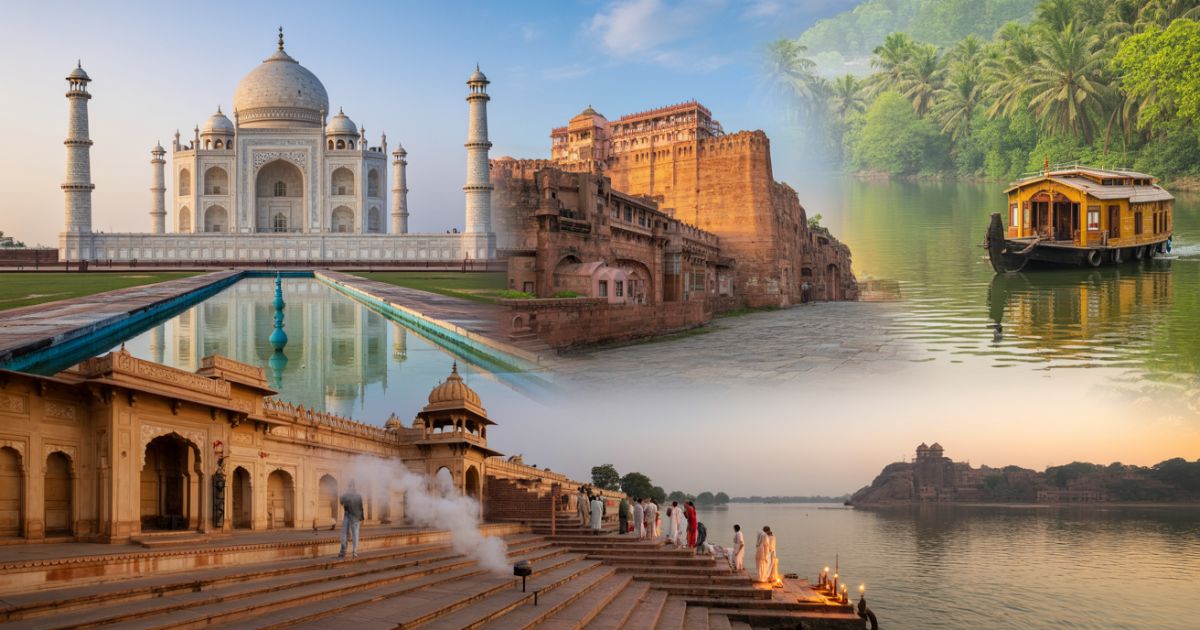

Rajasthan offers a vibrant and unforgettable introduction to India’s rich heritage. As the country’s largest state, it is a land of majestic hilltop forts, grand palaces, colorful bazaars, and vast desert landscapes. This Rajasthan Travel Guide is specially crafted for first-time visitors who want to explore the essence of royal India. From the iconic cities of Jaipur, Jodhpur, Udaipur, Jaisalmer, Pushkar, and Mount Abu, every destination showcases a unique blend of history, culture, and charm.
In this Rajasthan Travel Guide, you’ll discover everything from architectural wonders and serene lakes to bustling markets, desert adventures, and authentic local cuisine. Experience the timeless beauty of Rajasthan as you wander through pink-hued streets, blue-painted houses, golden sand dunes, and tranquil lakes that reflect centuries of royal legacy.
Planning Your Rajasthan Itinerary
- How many days? Rajasthan is vast. A 5–7 day trip can cover major highlights (e.g. Jaipur, Jodhpur, Udaipur). 8–10 days lets you add Jaisalmer; 12–14 days can complete the classic circuit. First-timers often find 7–10 days ideal to balance depth and pace.
- Best time to visit: Rajasthan’s winter offers the most pleasant weather – cool nights and sunny, dry days. Summer is very hot, while the monsoon brings brief rains and a green desert. Festivals like the Pushkar Camel Fair and Jaipur’s festivals occur in winter, making it the peak season.
- Transport & routes: Most travelers fly into New Delhi and take an onward flight or train to Rajasthan. Jaipur also has an international airport. Within Rajasthan, hiring a private car and driver is common and recommended for comfort and flexibility. Trains and buses connect the main cities, but a private vehicle helps you escape crowds and carry luggage.
- Safety tips: Rajasthan is generally tourist-friendly, but observe usual precautions. Travel with water, avoid drinking tap water, and ask locals about any restricted areas. Book desert camps through reputable operators. Dress respectfully to blend with local customs.
Jaipur – The Pink City
Jaipur, Rajasthan’s capital, is the starting point for many visitors. Its royal architecture and lively markets give you a royal welcome. Explore:
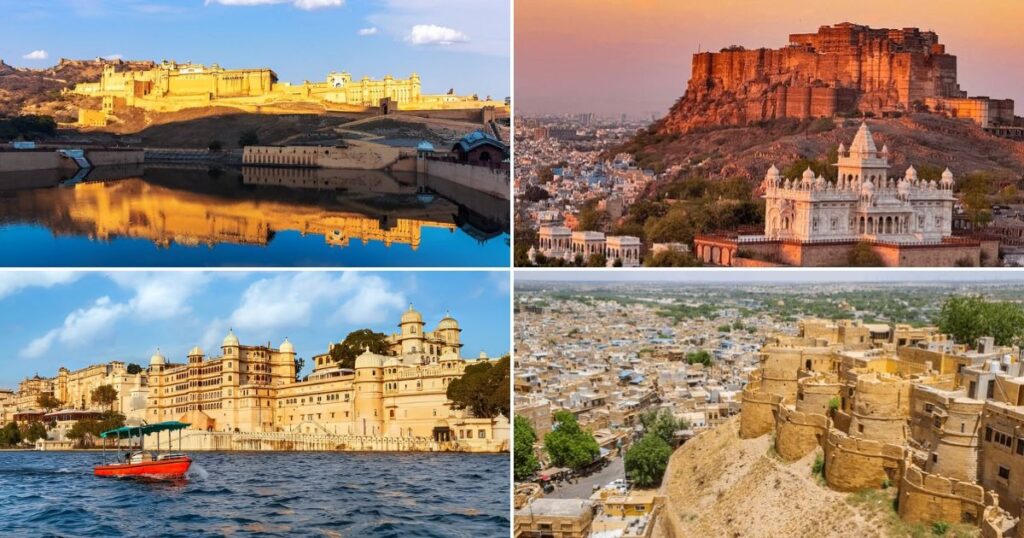
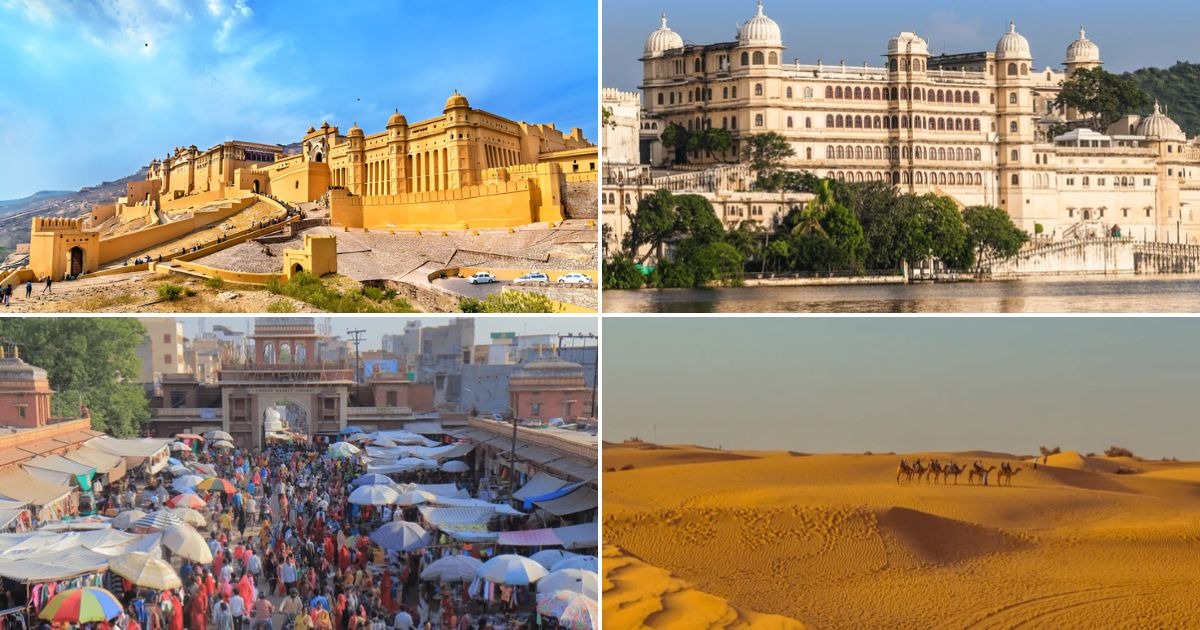
- Amber Fort : Perched on a hill above Maota Lake, Amber Fort blends Rajput and Mughal styles. Built by Raja Man Singh I in 1592, it’s carved from pink-and-cream sandstone and marble. Inside, marvel at the mirrored Sheesh Mahal and the ornately painted Ganesh Pol gateway. Sunrise or early morning light brings out its golden tones.
- City Palace: This sprawling palace complex was the seat of Jaipur’s rulers. Its architecture fuses Mughal and Rajput designs. The palace still partly serves as a royal residence and houses the Maharaja Sawai Man Singh II Museum. Key spots include Chandra Mahal, Pritam Niwas Chowk, and museums of royal artifacts, arms, and textiles.
- Hawa Mahal : This iconic pink facade is shaped like a five-story honeycomb. Its 953 jharokha windows allowed royal women to observe street life unseen. Early morning light or sunset makes the latticed walls glow. Best views come from the opposite street or adjacent cafes.
- Jantar Mantar Observatory: A UNESCO World Heritage site, this 18th-century open-air observatory has ~20 giant stone instruments. The colossal Samrat Yantra sundial can tell time to within seconds. Even non-astronomers find the precision and size of these tools awe-inspiring.
- Jaipur bazaars: No trip is complete without strolling the vibrant markets. Johari Bazaar is famed for jewelry and gemstones, Bapu Bazaar for textiles and local shoes, and Tripolia Bazaar for bangles. You’ll see craftsmen at work and can haggle for Rajasthani crafts. Everything here is handmade, reflecting the region’s artisan heritage.
Jodhpur – The Blue City
Jodhpur impresses at a glance with the indigo-painted houses below its fortress walls. Key highlights:
- Mehrangarh Fort: Rising 400 feet above Jodhpur, Mehrangarh is one of India’s largest hill forts. Founded in 1459 by Rao Jodha, its red sandstone ramparts enclose ornate palaces, courtyards, and the Chamunda Mataji temple. Nobel laureate Rudyard Kipling called it “a palace that might have been built by Titans and colored by the morning sun”. Don’t miss the panoramic views of the blue city below and the old royal museum inside.
- Blue City alley walks: Explore the narrow lanes of Brahmpuri and Navchokiya, where houses are painted in shades of blue. It’s a photographer’s dream and a chance to see everyday life—kitchens, clotheslines, goats and bicycles all framed by blue walls.
- Jaswant Thada: Just downhill from Mehrangarh, this white marble memorial was built in 1899 for Maharaja Jaswant Singh II. Often called the “Taj Mahal of Marwar,” the intricately carved marble screens glow under the sun. The gardens and small lake beside it are serene spots with great views of the fort.
- Clock Tower & Sardar Market: In the city’s heart, the Ghanta Ghar marks a bustling market area. Here you can shop for spices, textiles, antiques, and leather goods. In the evenings especially, the market is lively with local shoppers and vendors.
Jaisalmer – The Golden Desert City
In western Rajasthan, Jaisalmer unfolds like a film set: its honey-colored stone architecture and endless dunes. Highlights include:
- Jaisalmer Fort (Sonar Quila): A true living fort, Jaisalmer’s citadel is still home to families, shops, and temples within its walls. A UNESCO World Heritage site, its stone ramparts glow gold at sunrise. Inside, wander labyrinthine lanes, visit ornately carved Jain temples, and sip chai at a rooftop café overlooking the city. The fort’s openness (it feels like a village) gives a rare sense of history still alive.
- Patwon Ki Haveli: A short walk from the fort, this complex of five 19th-century merchant mansions is a masterpiece of Rajasthani architecture. Built by Guman Singh Patwa, these yellow sandstone houses are covered in jali-work balconies and frescoes. The largest now serves as a museum, displaying royal artifacts and showing how wealthy traders once lived.
- Gadisar Lake: This tranquil reservoir is ringed by cenotaphs and temples. At sunset, the golden light on the water is beautiful. You can hire a small boat for a peaceful ride around the lake or along its channels.
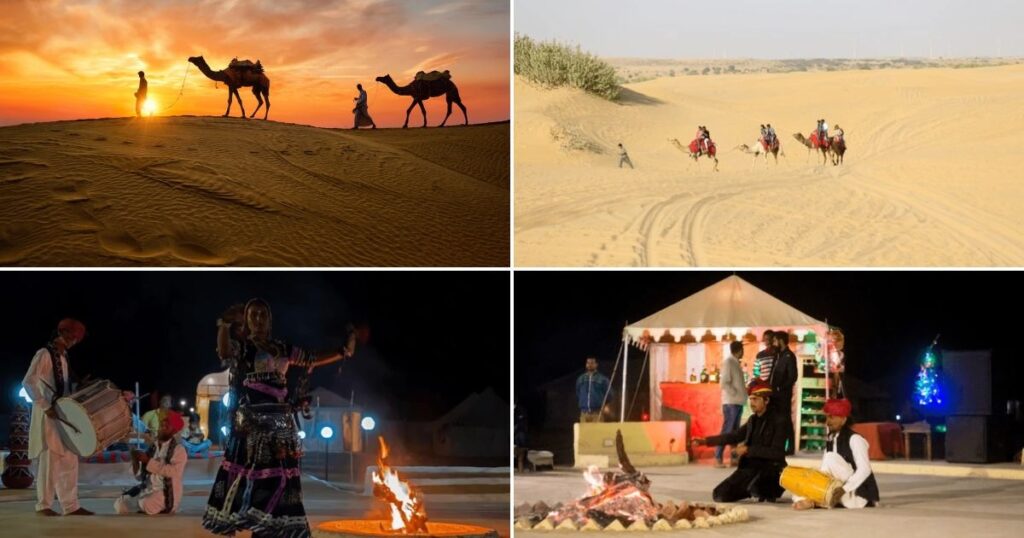
- Sam Sand Dunes: About 40 km from town, the Sam dunes are the quintessential Thar Desert experience. Come for camel safaris or jeep treks over rolling sands, an evening of folk dance around a bonfire, and dinner under the stars in a luxury desert camp. Watching the sun set on the dunes is unforgettable.
- Khuri Sand Dunes: If you prefer quieter sands, the Khuri area is less crowded. Basic camel rides and rustic camps let you enjoy the silence of the desert away from the tourist bustle.
Udaipur – The City of Lakes
Known as Rajasthan’s most romantic city, Udaipur’s beauty lies in its lakes and palaces. Must-see experiences:
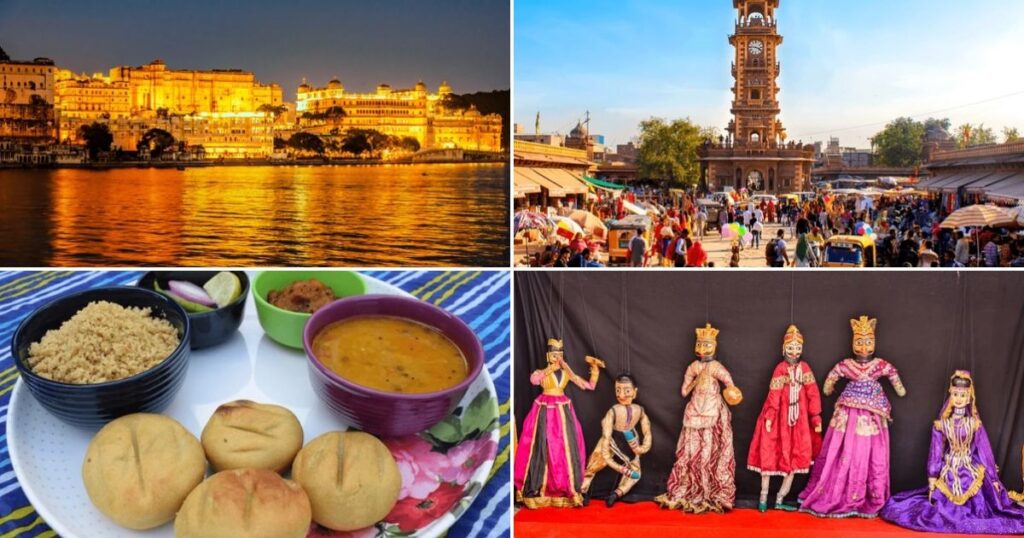
- City Palace: Dominating the lakefront, the Udaipur City Palace complex is the largest royal palace in Rajasthan. Begun in 1553 by Maharana Udai Singh II and added to over 400 years, it blends Rajasthani and Mughal styles. Wander its courtyards, the ornate Crystal Gallery, the marble Bada Mahal, and elaborate mirrorwork halls. Steps and terraces lead down to Lake Pichola, offering postcard views.
- Lake Pichola: Glide across this graceful lake by boat—at sunset especially, the water reflects the palaces and Aravalli hills. The boat usually takes you past Jag Mandir Island Palace and the famous Lake Palace hotel (built mid-18th C). Evening cruises here are a city highlight.
- Ambrai Ghat: On the lake’s edge beneath the City Palace, Ambrai Ghat is a favorite spot to watch the sunset. The golden City Palace facade lights up against pink skies, with boats drifting on the lake. It’s a peaceful place for photos or a quiet moment.
- Sajjangarh Palace: Perched on a hill north of the city, this granite hilltop palace offers 360° views. It was built as a summer retreat but is best visited at dusk. The panorama of Udaipur’s lakes and palaces glowing in sunset hues is spectacular.
- Bagore Ki Haveli : In the old city near Gangaur Ghat, this 18th-century haveli now hosts nightly folk performances. Watch Rajasthani puppet shows, traditional Ghoomar and Kalbelia dances, and folk songs in a heritage courtyard setting – an entertaining way to experience local culture.
Pushkar – The Spiritual Desert Town
Pushkar has a relaxed, mystical vibe. Highlights:
- Brahma Temple: Pushkar’s most famous shrine is one of very few in India dedicated to Lord Brahma. The white marble temple with its red spire stands on the edge of Pushkar Lake and draws pilgrims.
- Pushkar Lake & Ghats: The sacred lake is ringed by 52 bathing ghats. Hindus and pilgrims take ritual dips here, especially during full moon celebrations. It’s a photographer’s delight at sunrise and sunset when devotional lights are floated on the water.
- Savitri Temple: Up on Ratnagiri Hill, accessible by a scenic ropeway or 3 km hike, stands this small temple dedicated to Brahma’s consort. The viewpoint offers a panoramic sunrise or sunset view over Pushkar town and lake.
- Markets & Culture: Pushkar’s lanes host dozens of shops selling leather goods, silver jewelry, and handicrafts. There are many laid-back cafes catering to backpackers. The town’s atmosphere – with sadhus, painted shops and occasional camels wandering by – feels like a gentle pause on your Rajasthan journey.
Mount Abu – Rajasthan’s Hill Station
Mount Abu, Rajasthan’s only true mountain retreat, is green and cool. Key sights:
- Dilwara Jain Temples: Just north of the town, these 11th–16th-century Jain temples are a masterpiece of white marble carving. Each temple is famous for intricately sculpted domes, columns and panels, all hewn from glittering Makrana marble. The effect is dazzling – often cited as the most beautiful of Rajasthan’s Jain temples.
- Nakki Lake: In the heart of town lies this tranquil lake, said to be dug by gods. Paddleboat rides and strolls along the tree-lined shore are refreshing after desert travel.
- Guru Shikhar: A short drive away is the highest peak of Aravalli at 1722m. The mountain offers scenic nature trails and a temple dedicated to the Hindu sage Dattatreya. The panoramic views of plains below are rewarding.
- Sunset Point: Near Dilwara, a viewpoint overlooking the Nakki Lake valley is named Sunset Point – and it lives up to its name. Come here at sundown for lovely views as the lights of Mount Abu turn on.
Rajasthan Itinerary Ideas
For context, here are sample itinerary outlines :
- 7-Day: Jaipur → Jodhpur → Udaipur.
- 9-Day: Jaipur → Jodhpur → Jaisalmer → Udaipur.
- 14-Day Grand Tour: Jaipur → Pushkar → Jodhpur → Jaisalmer → Udaipur → Mount Abu.
Rajasthan Food & Cuisine
Rajasthani food is robust and rich, reflecting desert traditions. Must-try dishes include:
- Dal Baati Churma: Lentils (dal) served with baked wheat dough balls (baati) and sweet crushed wheat (churma). A classic combo that’s a thali staple.
- Laal Maas: A fiery red chili mutton curry, traditionally cooked with game meat. Its heat comes from dried red Mathania chilies.
- Ker Sangri: A tangy desert side-dish made from dried berries (ker) and beans (sangri) cooked with spices.
- Gatte ki Sabzi: Yogurt-curry with gram flour dumplings. Comfort food for many locals.
Snacks like mirchi bada (spicy potato fritters) or kaleji kebabs in roadside stalls are also popular. Don’t miss a cup of sweet masala chai at a heritage hotel or cafe to relax after sightseeing.
Shopping & Souvenirs
Shopping is a highlight in Rajasthan. Local markets are overflowing with handicrafts:
- Jaipur: Known for gemstones, Kundan jewelry, block-printed fabrics, embroidered leather mojari shoes and Rajasthani textiles. Explore Johari Bazaar, Bapu Bazaar and Nehru Bazaar.
- Jodhpur: The Clock Tower market is great for spices, antique home decor, and bright bandhani textiles. Leather work and silver jewelry are also common finds.
- Jaisalmer: Pick up camel leather crafts, embroidered fabrics, Banjara mirror-work items, puppets, and Jaisalmer’s famous silver jewelry. You’ll find these all across the markets around the fort.
- Udaipur: Famous for delicate miniature paintings, colorful tie-dye fabrics, and high-quality silver jewelry. Hathipole Bazaar and Chandpole Bazaar have a good selection.
Transportation & Tips
Rajasthan’s distances can be long. Trains connect the major cities (e.g. Delhi–Jaipur–Jodhpur–Udaipur–Jaisalmer circuit), but schedules vary. Many travelers hire a driver-driven car for flexibility and to cover short hops between close cities (Jaipur–Pushkar, Jodhpur–Osian, etc.). Flights are available between Delhi, Jaipur, Jodhpur, and Udaipur.
- Getting Around Cities: Rickshaws and cycle-rickshaws are common for short trips; agree on a fare upfront. In Jaipur and Jodhpur you can also hire auto-rickshaws.
- Currency: ATMs are widespread in cities. Pushkar and villages may have limited facilities. Carry some cash for bazaar shopping and tips.
FAQs : Rajasthan Travel Guide
1. What is the best time to visit Rajasthan?
October to March offers the ideal weather for sightseeing, desert safaris, and exploring forts and palaces.
2. How many days are enough for a Rajasthan Travel Guide itinerary?
A complete Rajasthan Travel Guide typically recommends 7 to 10 days to cover major cities like Jaipur, Udaipur, Jodhpur, and Jaisalmer comfortably.
3. What is the best route in a Rajasthan Travel Guide?
Jaipur → Jodhpur → Jaisalmer → Udaipur is the most popular route.
4. Is Rajasthan safe for solo travelers?
Yes, Rajasthan is one of India’s safest and most tourist-friendly regions.
5. What are the best places to visit in Rajasthan?
Jaipur, Jodhpur, Jaisalmer, Udaipur, Pushkar, and Mount Abu are top destinations.
6. What should I eat in Rajasthan?
Popular dishes include Laal Maas, Dal Baati Churma, Ker Sangri, Ghewar, and Mawa Kachori.
7. Is desert safari included in a Rajasthan Travel Guide?
Yes, camel safari and desert camping in Jaisalmer are key highlights.
8. How to travel between cities in Rajasthan?
Private car, trains, and domestic flights are the best options.
9. Is a camel safari in Jaisalmer worth it?
Yes, sunset camel rides and overnight desert camping are must-do experiences.
10. Can I combine Rajasthan with the Golden Triangle?
Absolutely—Jaipur links perfectly with Delhi and Agra for an extended Golden Triangle trip.
Conclusion
This Rajasthan Travel Guide gives you everything needed to explore royal India—from Jaipur’s pink charm to Jaisalmer’s golden dunes and Udaipur’s serene lakes. Whether you’re planning a short trip or a grand journey, Rajasthan promises unforgettable memories.