
Ranthambore Wildlife Safari Guide 2026 – Tigers, Zones, Booking & Tips
The Moment the Jungle Goes Quiet
You are sitting in an open jeep. The morning air is cool and smells of dry earth. Birds are calling somewhere in the distance. Your guide suddenly raises his hand. Everyone stops talking.
The jungle goes silent.
And then, through the golden grass, you see it — a pair of amber eyes staring straight at you.
A Royal Bengal Tiger. Just 30 feet away.
Your heart stops. Then it races. You forget to breathe.
This is a Ranthambore Wildlife Safari. And once you experience it, nothing else comes close.
About Ranthambore National Park
Ranthambore National Park sits in the Sawai Madhopur district of Rajasthan, India. It is about 180 km from Jaipur and around 400 km from Delhi. The park covers nearly 1,334 sq km of rugged terrain — dry deciduous forests, ancient ruins, and deep lakes.
It is one of the best places in the world to spot wild tigers in their natural habitat. The park is part of Project Tiger, India’s flagship conservation programme. Today, Ranthambore is home to over 70 tigers, along with leopards, sloth bears, sambar deer, crocodiles, and over 300 species of birds.
The iconic Ranthambore Fort — a UNESCO World Heritage Site — watches over the jungle from a rocky hilltop. This unique mix of wildlife and history makes Ranthambore National Park safari an unforgettable experience.
Whether you are an Indian family on a holiday or an international traveller chasing a tiger, Ranthambore delivers.
My Personal Tiger Safari Experience
I booked Zone 3 on a cool November morning. We entered the park just before sunrise. The jeep rumbled along the dusty trail. Peacocks scattered. A spotted deer looked up nervously.
Our guide whispered, “Fresh pug marks. She passed here an hour ago.”
We drove in silence. Every rustle made us look up. Every shadow felt alive.
Then — a sambar deer gave a loud alarm call. We stopped.
Minutes passed. Then she appeared. T-19, the famous tigress, walking slowly along the lake shore. She stopped, drank water, yawned, and disappeared into the reeds.
I had chills. My travel partner was literally shaking.
That 10-minute sighting felt like a lifetime. The sights, the sounds, the sheer wildness of it — you carry it home in your chest forever.
This is why a tiger safari in Ranthambore is on every wildlife lover’s bucket list.
Safari Types: Jeep vs Canter
When you book a Ranthambore Wildlife Safari, you choose between two options.
Jeep Safari (Gypsy)
- Seats 6 passengers
- More flexible and off-road capable
- Better for photography (less vibration, better angles)
- Ideal for small groups and serious wildlife enthusiasts
- Slightly more expensive per person
Canter Safari
- Seats 20 passengers
- Budget-friendly option
- A fun group experience
- Restricted to main zones and roads
- Ideal for families, school groups, and budget travellers
Our recommendation: Go for a jeep if tiger photography or serious sighting is your goal. A canter works well if you are travelling with a large group or want to save money.
Each safari lasts about 3 hours — one morning slot and one afternoon slot are available daily.
Ranthambore Safari Zones Explained
Ranthambore is divided into 10 safari zones. Each zone offers a different experience.
Best Zones for Tiger Sightings
| Zone | Highlights | Best For |
|---|---|---|
| Zone 1 | Lakes, ruins, open grassland | Photography, tiger sightings |
| Zone 2 | Padam Lake, dense forest | Tigers, birds, leopards |
| Zone 3 | Rajbagh Lake, ruins | Best overall tiger sightings |
| Zone 4 | Open terrain, Malik Talao | Birds, tigers, bears |
| Zone 5 | Thick forest, varied wildlife | Leopards, deer, jungle feel |
| Zone 6 | Buffer zone, fewer crowds | Peaceful, quieter safari |
| Zones 7–10 | Newer buffer zones | Good sightings, less competition |
Top Picks for Tiger Sightings: Zones 1, 2, 3, and 4
Zones 1–4 are in the core area of the park and have the highest tiger activity. Zone 3 (around Rajbagh and Padam lakes) is widely considered the best zone in Ranthambore. If you are visiting for the first time, request one of these zones when booking.
Best Time to Visit Ranthambore
The park is open from October to June every year. It remains closed during the monsoon season (July to September).
Season-by-Season Breakdown
October – November (Post-Monsoon) The jungle is green, the weather is pleasant, and tigers are highly active. Excellent for both sightings and photography.
December – February (Winter) Cool mornings, comfortable afternoons. Tigers come out to bask in the sun. Highly recommended for international travellers.
March – May (Summer) The water levels drop. Animals gather around lakes and waterholes. Tiger sighting chances are at their peak in April and May. This is the best time for guaranteed sightings — but it is hot (up to 42°C).
June (End of Season) The park closes after mid-June. Book early if you plan to visit.
Our Top Recommendation: Visit between February and April for the best balance of weather and tiger sighting probability.
Ranthambore Safari Booking Guide
Booking a Ranthambore safari is now fully online and managed by the government. Here is how to do it step by step.
Step 1: Visit the Official Website
Go to rajasthanwildlife.in — the official Rajasthan Forest Department booking portal.
Step 2: Register Your Account
Create a free account using your email ID and phone number.
Step 3: Select Your Safari Details
Choose your preferred:
- Date
- Zone (1–10)
- Safari type (Jeep or Canter)
- Morning or evening slot
Step 4: Enter Passenger Details
You will need to submit:
- Name and age of each passenger
- ID proof (Aadhaar for Indians, Passport for foreign nationals)
Step 5: Pay Online
Fees vary by nationality:
- Indian adults: ₹750–₹850 per person (jeep)
- Foreign nationals: ₹2,500–₹3,000 per person (jeep)
- Canter rates are lower
Step 6: Download Your Permit
Save the booking confirmation. You must carry a valid photo ID that matches your booking details.
Pro Tip: Ranthambore safari booking opens 90 days in advance. Popular zones like 1, 2, and 3 fill up very fast — especially in peak season. Book early!

8 Travel Tips for a Better Safari Experience
- Wake up early. Morning safaris (starting at 6:00–6:30 AM) offer better tiger sightings. Animals are more active in cool temperatures.
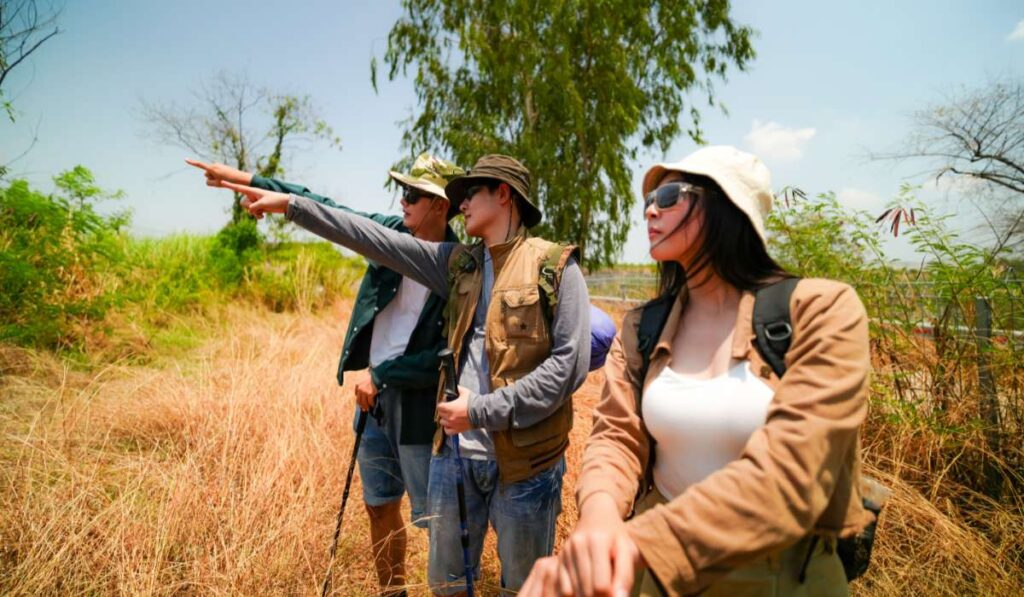
- Wear muted colours. Stick to khaki, olive, brown, or beige. Avoid bright colours and whites — they disturb wildlife.
- Keep your voice down. Sound travels far in the jungle. Silence increases your chances of a sighting.
- Carry binoculars. A good pair helps you spot animals in dense foliage before others do.
- Do not use flash photography. It disturbs animals and ruins the experience for others.
- Stay in the jeep at all times. Never stand or hang outside. It is unsafe and not allowed.
- Book multiple safaris. One safari is rarely enough. Most visitors book 2–3 safaris over 2 nights to maximise tiger sighting chances.
- Combine with the Golden Triangle. Many travellers combine Ranthambore with Delhi, Agra, and Jaipur. A Golden Triangle Tour with Ranthambore is one of India’s most popular itineraries — and for very good reason.
FAQs About Ranthambore Wildlife Safari
Q1. Is a tiger sighting guaranteed in Ranthambore?
No sighting is ever guaranteed — it is wild nature, after all. However, Ranthambore has one of the highest tiger sighting rates in India. In peak season (March–May), sighting rates can go above 70–80%.
Q2. How many safaris should I book?
We recommend at least 2 safaris (morning and afternoon on the same day, or across two days). More safaris = better chances.
Q3. Which is better — morning or evening safari?
Morning safaris generally offer better sightings. Tigers are more active in the early hours. The light is also better for photography.
Q4. Can I book Ranthambore safari on arrival?
Walk-in slots are available at the forest office, but they are limited and often sold out in peak season. Always pre-book online.
Q5. How do I combine Ranthambore with the Golden Triangle?
It is very easy. Ranthambore is just 3–4 hours from Jaipur by road. Many tour operators offer a Ranthambore tour with Golden Triangle itinerary that covers Delhi – Agra – Jaipur – Ranthambore in 6 to 8 days. It is perfect for both Indian and international travellers.
Final Thoughts
A Ranthambore Wildlife Safari is not just a tourist activity. It is an experience that changes you.
The silence of the jungle, the thrill of a tiger sighting, the ancient fort standing guard over it all — Ranthambore is raw, real, and absolutely magnificent.
Whether you are planning your first Indian wildlife trip or returning for the tenth time, this jungle never disappoints.
Book early, travel smart, and let the jungle do the rest.
Happy Safariing! 🐯
Related Tours