
Best Places to Visit in Agra: 15 Must-Visit Attractions for Every Traveler (2026 Guide)
Most people fly into Agra, photograph the Taj Mahal for two hours, and leave the same afternoon. That’s a mistake — and if you talk to anyone who has actually spent a full day wandering this city, they’ll tell you the same thing.
Agra is not a single monument. It’s a Mughal capital that happened to produce the most famous building on earth, and everything around that building — the forts, the tombs, the abandoned city on its outskirts, the bazaars, the food stalls selling petha — tells the rest of the story that the Taj Mahal only hints at.
Give Agra one full day and you’ll see the highlights. Give it two, and you’ll understand why Shah Jahan chose to build here, why Akbar ruled from here, and why the Yamuna riverfront still feels like the center of an empire.
This guide covers the 15 best places to visit in Agra, plus hidden gems, food, shopping, timing, and a realistic itinerary — everything you need to plan a trip that goes well beyond the postcard shot. If you’d rather have the logistics handled for you, our Taj Mahal tour packages cover most of the places on this list with a private guide and vehicle included.
Quick Planning Guide
| Category | Details |
|---|---|
| Best Time to Visit | October to March (cool, clear weather) |
| Ideal Trip Duration | 1 day for highlights; 2 days to add Fatehpur Sikri and the wildlife centres |
| Nearest Airport | Agra Airport (Kheria), 7–8 km from the city; Delhi’s IGI Airport (~230 km) has far more international connections |
| Nearest Railway Station | Agra Cantt Railway Station — most travelers arriving from Delhi land here (see Agra Cantt to Taj Mahal distance for the exact route) |
| Local Transportation | Prepaid auto-rickshaws, e-rickshaws (mandatory within 500 m of the Taj Mahal, as diesel/petrol vehicles are banned there), cycle-rickshaws, and private cabs |
| Average Budget | Budget: ₹1,500–2,500/day · Mid-range: ₹4,000–6,000/day · Luxury: ₹10,000+/day (per person, excluding flights) |
| Who Should Visit | Families, couples, solo travelers, history and architecture lovers, photographers — genuinely everyone |
Quick Comparison Table
Short on time? Use this table to decide which attractions fit your schedule before reading the full details below.
| Attraction | Time Required | Best For | Entry Fee | Must-Visit Rating |
|---|---|---|---|---|
| Taj Mahal | 2–3 hrs | First-time visitors, couples | ₹50 Indian / ₹1,100 Foreign (+₹200 mausoleum) | ★★★★★ |
| Agra Fort | 2–3 hrs | History lovers, photographers | ₹50 Indian / ₹650 Foreign | ★★★★★ |
| Fatehpur Sikri | Half day | History enthusiasts, day-trippers | ₹35–50 Indian / ₹550 Foreign | ★★★★☆ |
| Itmad-ud-Daulah (Baby Taj) | 45–60 min | Architecture lovers | ₹40 Indian / ₹550 Foreign | ★★★★☆ |
| Mehtab Bagh | 45–60 min | Photographers, sunset views | ₹25–30 Indian / ₹200–300 Foreign | ★★★★☆ |
| Wildlife SOS Elephant Centre | 1.5–2 hrs | Families, animal lovers | Varies by tour | ★★★★☆ |
| Kinari Bazaar | 1–2 hrs | Shoppers, street food | Free (shopping costs vary) | ★★★★☆ |
| Kalakriti (Mohabbat the Taj) | ~1 hr show | Couples, families, evenings | ₹500–800 | ★★★★☆ |
| Akbar’s Tomb (Sikandra) | 1–1.5 hrs | Garden lovers, quiet sightseeing | ₹30 Indian / ₹310 Foreign | ★★★☆☆ |
| Taj Nature Walk | 1–1.5 hrs | Families, nature lovers | Under ₹50 | ★★★☆☆ |
| Sadar Bazaar | 1–2 hrs | Souvenirs, casual dining | Free (shopping costs vary) | ★★★☆☆ |
| Wildlife SOS Bear Rescue Centre | 1–1.5 hrs | Animal lovers, families | Varies by tour | ★★★☆☆ |
| Jama Masjid, Agra | 30–45 min | Architecture & culture | Free | ★★★☆☆ |
| Mankameshwar Temple | 30–45 min | Culturally curious travelers | Free | ★★★☆☆ |
| Chini Ka Rauza | 30–45 min | Offbeat architecture fans | Nominal ASI charge | ★★★☆☆ |
Top 15 Best Places to Visit in Agra
1. Taj Mahal
Overview
The Taj Mahal needs little introduction, but it deserves a proper visit rather than a rushed one. Built by Emperor Shah Jahan as a mausoleum for his wife Mumtaz Mahal, this white marble monument on the Yamuna’s banks is one of the most technically precise buildings ever constructed — and it changes character completely depending on when you arrive.
Why Visit?
- It’s a UNESCO World Heritage Site and one of the New7Wonders of the World
- The marble inlay work (pietra dura) is worth studying up close, not just photographing from a distance
- Sunrise visits offer a completely different mood than midday crowds
- The symmetry of the gardens, gateway, and mausoleum was designed as one continuous experience
- It anchors every other Agra itinerary, so seeing it first helps you understand the city’s Mughal context
Attraction Snapshot
| Detail | Information |
|---|---|
| Best For | First-time visitors, photographers, couples |
| Time Required | 2–3 hours |
| Entry Fee | ₹50 for Indian citizens, ₹1,100 for foreign tourists (plus ₹200 for main mausoleum access) — verify on the official ASI site as fees are revised periodically |
| Opening Hours | Sunrise to sunset, closed on Fridays |
| Location | Dharmapuri, Forest Colony, Agra, near the Yamuna riverbank |
Top Highlights
- The main mausoleum chamber housing the tombs of Shah Jahan and Mumtaz Mahal
- The four minarets, each tilted slightly outward as an earthquake safeguard
- The reflecting pool along the central walkway
- The Great Gate (Darwaza-i-Rauza), often overlooked in the rush to reach the marble
Local Expert Tip
Enter through the Eastern Gate rather than the Western Gate if you’re staying near Taj Ganj — the queues move faster, and it puts you closer to the mausoleum entrance once inside.
Common Mistakes to Avoid
Don’t skip booking your ticket online in advance, especially in peak winter season — the counter queues can eat up an hour you don’t have. Also, don’t wear anything that needs to come off at security; large bags, tripods, food, and even books get flagged.
Nearby Attractions
Agra Fort, Mehtab Bagh, Taj Nature Walk, Kinari Bazaar
Worth Visiting?
Non-negotiable. Every traveler type — from honeymooners to history students — gets something different out of it, which is rare for a single monument.

2. Agra Fort
Overview
Agra Fort is where the Mughal empire actually functioned — not just where it’s buried. This red sandstone fortress on the Yamuna was Akbar’s seat of power, later expanded by Shah Jahan into a semi-marble palace complex, and it’s also where Shah Jahan spent his final years under house arrest, staring across the river at the tomb he built.
Why Visit?
- You get one of the best distant views of the Taj Mahal from inside the fort walls
- The mix of red sandstone (Akbar-era) and white marble (Shah Jahan-era) architecture tells a clear visual story of two reigns
- Musamman Burj, the tower where Shah Jahan was imprisoned, is genuinely moving once you know the history
- It’s far less crowded than the Taj Mahal, so you can actually explore at your own pace
- Open all seven days, unlike the Taj Mahal
Attraction Snapshot
| Detail | Information |
|---|---|
| Best For | History lovers, architecture enthusiasts, photographers |
| Time Required | 2–3 hours |
| Entry Fee | ₹50 for Indians, ₹650 for foreign tourists — check the official ASI listing before your trip |
| Opening Hours | 6:00 AM – 6:00 PM daily, last entry around 5:00–5:30 PM |
| Location | Rakabganj, Agra, roughly 2.5 km from the Taj Mahal |
Top Highlights
- Musamman Burj and its marble lattice screens
- Khas Mahal and Sheesh Mahal (the “Palace of Mirrors”)
- Diwan-i-Am, the hall of public audience
- Amar Singh Gate, the only entry point open to tourists today
Local Expert Tip
Arrive within the first hour of opening. The fort’s eastern-facing sections catch soft morning light that makes the red sandstone genuinely glow — and you’ll share the space with far fewer tour groups.
Common Mistakes to Avoid
Travelers often rush through in 45 minutes because they’ve already “seen the big one.” Give it real time — the complex is layered, and the Taj Mahal view from Shah Jahan’s tower is a highlight in its own right.
Nearby Attractions
Jama Masjid, Kinari Bazaar, Mankameshwar Temple, Chini Ka Rauza
Worth Visiting?
Yes, and arguably underrated. If you only have energy for two stops in Agra, make this the second one.
3. Mehtab Bagh
Overview
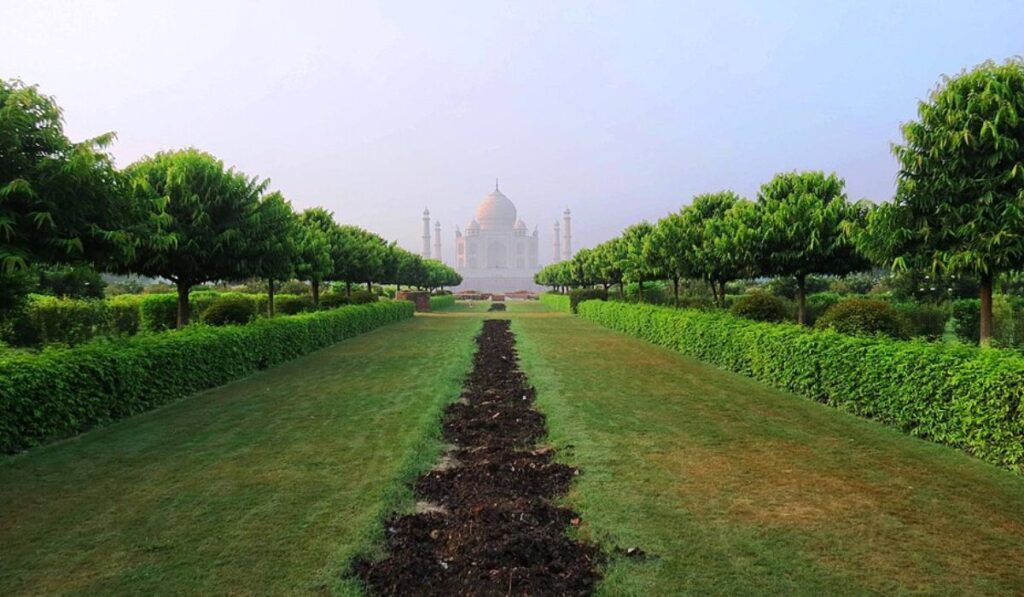
Mehtab Bagh, the “Moonlight Garden,” sits directly across the Yamuna from the Taj Mahal, giving you the classic symmetrical, unobstructed view you’ve seen in photographs — minus the crowds on the Taj’s own grounds. It was originally laid out under Emperor Babur and later restored by the Archaeological Survey of India.
Why Visit?
- The single best angle for a full-frontal Taj Mahal photograph, especially at sunset
- Far quieter than the main complex, ideal if you want a calmer moment
- A genuine Mughal charbagh garden layout, not just a viewing platform
- Great option if you want to see the Taj without paying the full entry fee for a repeat visit
Attraction Snapshot
| Detail | Information |
|---|---|
| Best For | Photographers, couples, sunset viewing |
| Time Required | 45–60 minutes |
| Entry Fee | Roughly ₹25–30 for Indians, ₹200–300 for foreign visitors — confirm current rates on-site |
| Opening Hours | Sunrise to sunset daily |
| Location | Opposite bank of the Yamuna, north of the Taj Mahal |
Top Highlights
- Unobstructed, symmetrical Taj Mahal views
- The octagonal tank and fountain remains uncovered during restoration
- Quiet lawns ideal for an evening walk
Local Expert Tip
Time your visit about 45 minutes before sunset. The light hits the Taj Mahal’s marble from across the river in a way that no daytime photo from inside the complex can match.
Common Mistakes to Avoid
Don’t skip this thinking “I’ve already seen the Taj.” The reverse view is genuinely different, and it’s one of the few spots where you can photograph the entire monument without other tourists in frame.
Nearby Attractions
Taj Mahal, Itmad-ud-Daulah, Taj Nature Walk
Worth Visiting?
Ideal for photographers and anyone visiting for a second time. First-timers on a tight schedule can skip it, but it’s a strong add-on for a two-day trip.
4. Itmad-ud-Daulah (Baby Taj)
Overview
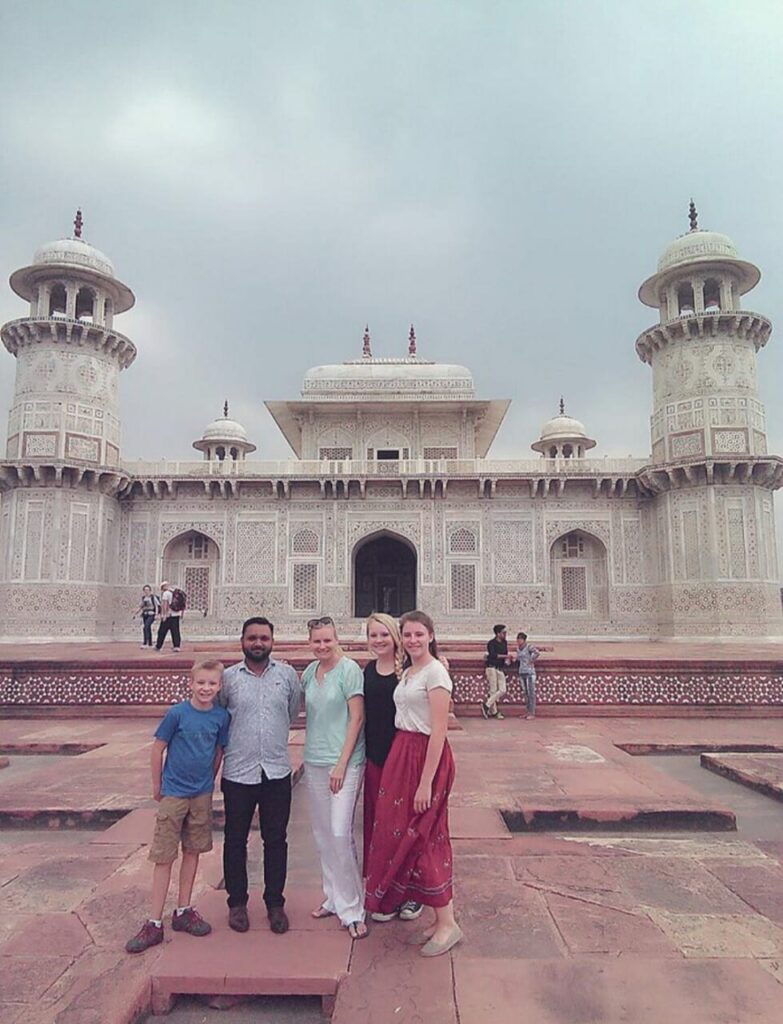
Often called the “Baby Taj,” this tomb was built by Empress Nur Jahan for her father, Mirza Ghiyas Beg, and is widely considered the architectural bridge between earlier Mughal tomb design and the Taj Mahal itself. The marble inlay here is, in some ways, more delicate than the Taj’s.
Why Visit?
- The first fully marble Mughal tomb, predating the Taj Mahal by roughly 15 years
- Intricate pietra dura and jali (lattice) work you can view up close, without the same security distance as the Taj
- A much smaller, more intimate site — easy to appreciate in under an hour
- Sits on the same riverbank, making it a natural pairing with Mehtab Bagh
Attraction Snapshot
| Detail | Information |
|---|---|
| Best For | Architecture enthusiasts, travelers short on time |
| Time Required | 45–60 minutes |
| Entry Fee | ₹40 for Indians, ₹550 for foreign tourists — verify before visiting |
| Opening Hours | Sunrise to sunset daily |
| Location | Moti Bagh, on the eastern bank of the Yamuna |
Top Highlights
- Fine marble jali screens and semi-precious stone inlay
- The riverside setting, quieter than most Agra monuments
- Corner towers with detailed floral motifs
Local Expert Tip
Bring a small flashlight or use your phone’s light — some of the finest inlay work is in shaded interior corners that are easy to miss in daylight.
Common Mistakes to Avoid
Many tour itineraries skip this entirely in favor of Fatehpur Sikri. If you care about the artistic lineage of the Taj Mahal, don’t make that trade.
Nearby Attractions
Mehtab Bagh, Taj Mahal, Chini Ka Rauza
Worth Visiting?
Yes, particularly for architecture-focused travelers. It’s a quick, rewarding stop that rarely feels crowded.
5. Fatehpur Sikri
Overview
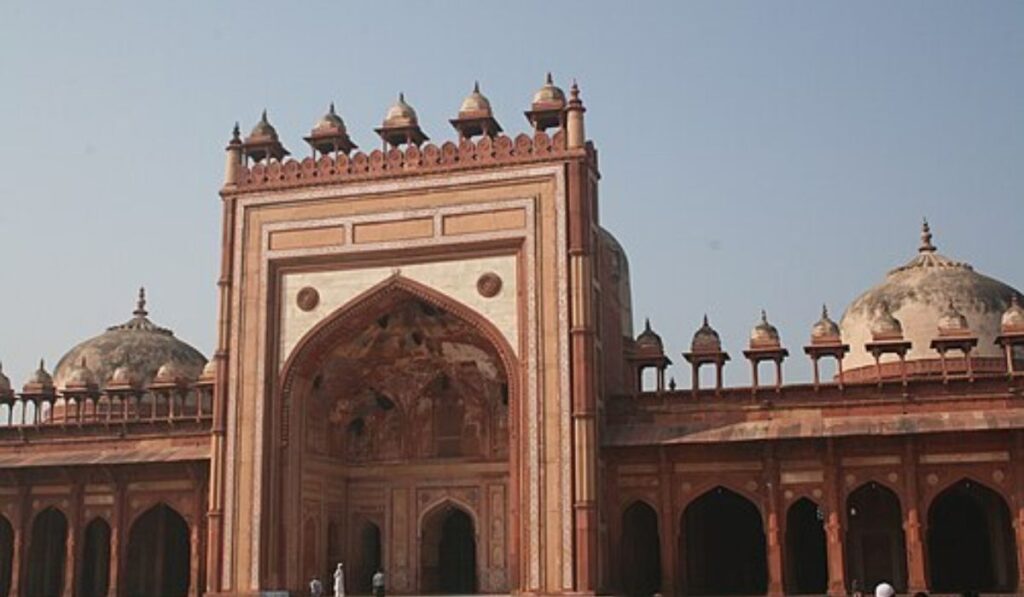
Fatehpur Sikri was Emperor Akbar’s purpose-built capital, abandoned within 15 years, reportedly due to water shortages. What’s left is one of the best-preserved Mughal cities in India — red sandstone palaces, courtyards, and one of the tallest gateways in the world, sitting largely intact roughly 40 km from Agra.
Why Visit?
- A UNESCO World Heritage Site with an entirely different feel from Agra’s riverside monuments
- Buland Darwaza, the “Gate of Magnificence,” is genuinely awe-inspiring at ground level
- The Diwan-i-Khas and Panch Mahal show Akbar’s architectural experimentation
- The Tomb of Salim Chishti inside the Jama Masjid complex remains an active pilgrimage site
Attraction Snapshot
| Detail | Information |
|---|---|
| Best For | History enthusiasts, day-trippers, photographers |
| Time Required | Half day, including travel |
| Entry Fee | Roughly ₹35–50 for Indians, ₹550 for foreign tourists — check official rates, as multiple sections may have separate tickets |
| Opening Hours | Sunrise to sunset daily |
| Location | Fatehpur Sikri town, about 40 km west of Agra |
Top Highlights
- Buland Darwaza
- Jama Masjid and the Tomb of Salim Chishti
- Panch Mahal’s five-tiered open pavilion
- Diwan-i-Khas, Akbar’s hall of private audience
Local Expert Tip
Hire a licensed guide at the entrance. The site has almost no signage explaining what each building was used for, and the layout only makes sense with context.
Common Mistakes to Avoid
Don’t attempt this as a rushed add-on to a single-day Agra trip — the round trip alone takes close to 2 hours. If you’re short on time, it deserves its own half-day rather than a squeezed-in stop.
Nearby Attractions
None immediately close by; it’s typically visited as a standalone half-day trip from Agra
Worth Visiting?
Highly recommended for a two-day Agra trip, less essential if you only have a single day and want to prioritize the city-center monuments.
6. Akbar’s Tomb (Sikandra)
Overview
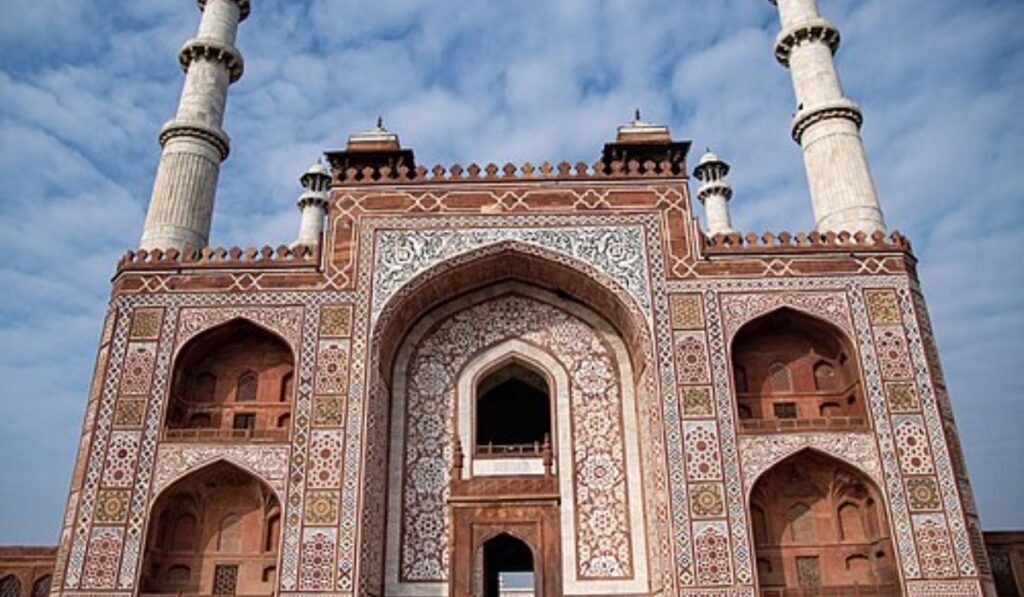
Located in the Sikandra suburb, this is Emperor Akbar’s mausoleum, completed by his son Jahangir. It’s a striking blend of red sandstone and white marble, set inside a large garden complex where deer roam freely — a genuinely peaceful contrast to the busier city-center sites.
Why Visit?
- Unique fusion of Hindu, Islamic, Christian, and Jain architectural motifs, reflecting Akbar’s own religious philosophy
- Spacious gardens with resident deer, making it feel more like a park than a monument
- Rarely crowded, even in peak season
- A four-tiered structure unlike any other Mughal tomb in Agra
Attraction Snapshot
| Detail | Information |
|---|---|
| Best For | Travelers wanting a quieter, garden-set monument |
| Time Required | 1–1.5 hours |
| Entry Fee | Roughly ₹30 for Indians, ₹310 for foreign tourists — confirm current pricing |
| Opening Hours | 6:00 AM – 6:00 PM daily |
| Location | Sikandra, about 8–10 km north of central Agra |
Top Highlights
- The four-tiered main mausoleum
- The southern gateway with its four marble minarets, an early precursor to the Taj Mahal’s design
- Resident deer and peacocks in the gardens
Local Expert Tip
Visit in the late afternoon — the deer are more active, and the lower light makes for calmer, less harsh photography than midday.
Common Mistakes to Avoid
Some visitors expect a mausoleum on the scale of the Taj Mahal and are underwhelmed. Go in expecting a quieter, garden-focused experience instead.
Nearby Attractions
Fatehpur Sikri (via the same route), Mariam’s Tomb nearby
Worth Visiting?
A strong choice for a second day in Agra, especially if you enjoy gardens and want a break from dense crowds.
7. Taj Nature Walk
Overview
A forested buffer zone right beside the Taj Mahal complex, Taj Nature Walk is a low-key park with walking trails, birdwatching spots, and a raised viewpoint that offers a surprisingly good angle on the Taj Mahal through the trees.
Why Visit?
- A calm, green break from the density of Agra’s monument circuit
- Good for birdwatching, especially in winter months
- A lesser-known Taj Mahal viewpoint that most tourists never find
- Family-friendly, with wide, flat walking paths
Attraction Snapshot
| Detail | Information |
|---|---|
| Best For | Nature lovers, families, casual walkers |
| Time Required | 1–1.5 hours |
| Entry Fee | Nominal, typically under ₹50 — check at the gate |
| Opening Hours | Sunrise to sunset daily |
| Location | Adjacent to the Taj Mahal’s eastern gate area |
Top Highlights
- Elevated viewing platform with a tree-framed Taj Mahal view
- Seasonal birdlife along the walking trails
- A genuinely quiet, uncrowded green space
Local Expert Tip
Combine this with an early Taj Mahal visit — it’s a five-minute walk from the eastern entrance, and doing both back-to-back saves you a separate trip across town.
Common Mistakes to Avoid
Don’t expect dense forest or wildlife on the scale of a national park — this is a modest, well-maintained buffer park, not a full nature reserve.
Nearby Attractions
Taj Mahal, Kinari Bazaar
Worth Visiting?
Good as an add-on rather than a standalone destination, particularly for families needing a slower-paced break.
8. Wildlife SOS Elephant Conservation Centre
Overview
Run by the nonprofit Wildlife SOS, this centre rehabilitates elephants rescued from abusive working and begging conditions across India. Visitors can observe and, on some tours, assist with feeding and bathing routines, all under close staff supervision.
Why Visit?
- A rare chance to see rescued elephants in a genuine rehabilitation setting rather than a performance venue
- Guided visits explain India’s elephant welfare challenges in practical, non-preachy terms
- A meaningful alternative to elephant-riding attractions, which welfare groups widely discourage
- Family-friendly and educational for children
Attraction Snapshot
| Detail | Information |
|---|---|
| Best For | Families, animal lovers, responsible tourism advocates |
| Time Required | 1.5–2 hours |
| Entry Fee | Varies by tour package — check directly with Wildlife SOS for current visit and donation options |
| Opening Hours | Typically morning to early afternoon; advance booking recommended |
| Location | Near Sur Sarovar (Keetham Lake), roughly 15–20 km from the Taj Mahal |
Top Highlights
- Guided elephant feeding sessions
- Staff-led talks on rescue operations and rehabilitation
- Riverside setting near Keetham Lake, good for birdwatching too
Local Expert Tip
Book your slot in advance directly with Wildlife SOS rather than through a general tour desk — visitor numbers are capped to avoid stressing the animals.
Common Mistakes to Avoid
Don’t confuse this with commercial “elephant camps” that offer rides — this is a rescue and rehabilitation centre, and the experience is intentionally hands-off and educational.
Nearby Attractions
Wildlife SOS Bear Rescue Centre, Sur Sarovar Bird Sanctuary
Worth Visiting?
Strongly recommended for families and anyone interested in ethical wildlife tourism — just don’t expect a typical zoo-style visit.
9. Wildlife SOS Bear Rescue Centre
Overview
Also operated by Wildlife SOS, this facility rehabilitates sloth bears rescued from India’s now-banned “dancing bear” trade. It sits close to the elephant centre and follows the same ethos: observation and education over performance.
Why Visit?
- Insight into a piece of Indian wildlife history most tourists never hear about
- Well-run, spacious enclosures designed for the bears’ welfare rather than visitor spectacle
- Easily combined with the elephant centre visit in the same trip
- A genuinely different kind of Agra experience, away from Mughal monuments
Attraction Snapshot
| Detail | Information |
|---|---|
| Best For | Animal lovers, families, travelers seeking non-monument experiences |
| Time Required | 1–1.5 hours |
| Entry Fee | Check directly with Wildlife SOS for current visit terms |
| Opening Hours | Morning to early afternoon; advance booking advised |
| Location | Near Sur Sarovar (Keetham Lake), close to the elephant centre |
Top Highlights
- Viewing platforms over open bear enclosures
- Educational context on the dancing bear trade and its end
- Quiet, low-tourist-traffic setting
Local Expert Tip
Pair this with the elephant centre and Sur Sarovar Bird Sanctuary for a full alternative day that skips monuments entirely — a good option if you’re visiting Agra for a second or third time.
Common Mistakes to Avoid
Don’t plan a rushed 20-minute stop; the value here comes from the guided context, not just a walk-past view.
Nearby Attractions
Wildlife SOS Elephant Conservation Centre, Sur Sarovar Bird Sanctuary
Worth Visiting?
A niche but rewarding stop for travelers who’ve already covered the main monuments and want something different.
10. Kinari Bazaar
Overview
One of Agra’s oldest markets, Kinari Bazaar sits near the Jama Masjid and specializes in wedding essentials — embroidery, textiles, jewelry, and trims — alongside general shopping. It’s chaotic, dense, and one of the best places to see everyday Agra rather than tourist Agra.
Why Visit?
- A genuine slice of local commerce, not a curated tourist market
- Excellent for zardozi embroidery, fabrics, and traditional jewelry
- Street food stalls scattered throughout, including local sweets
- A short walk from Agra Fort and Jama Masjid
Attraction Snapshot
| Detail | Information |
|---|---|
| Best For | Shoppers, street photographers, food explorers |
| Time Required | 1–2 hours |
| Entry Fee | Free (shopping costs vary) |
| Opening Hours | Roughly 10:00 AM – 9:00 PM, closed on some local holidays |
| Location | Near Jama Masjid, close to Agra Fort |
Top Highlights
- Wedding textile and embroidery shops
- Traditional jewelry stalls
- Street food, including local chaat and sweets
Local Expert Tip
Bargain, but keep it friendly — prices here are generally more reasonable than in tourist-zone shops near the Taj, so you don’t need to push as hard.
Common Mistakes to Avoid
Avoid visiting during the hottest midday hours in summer — the market is narrow, crowded, and largely uncovered.
Nearby Attractions
Agra Fort, Jama Masjid, Mankameshwar Temple
Worth Visiting?
Yes, especially if you want an authentic, non-touristy shopping experience.
11. Sadar Bazaar
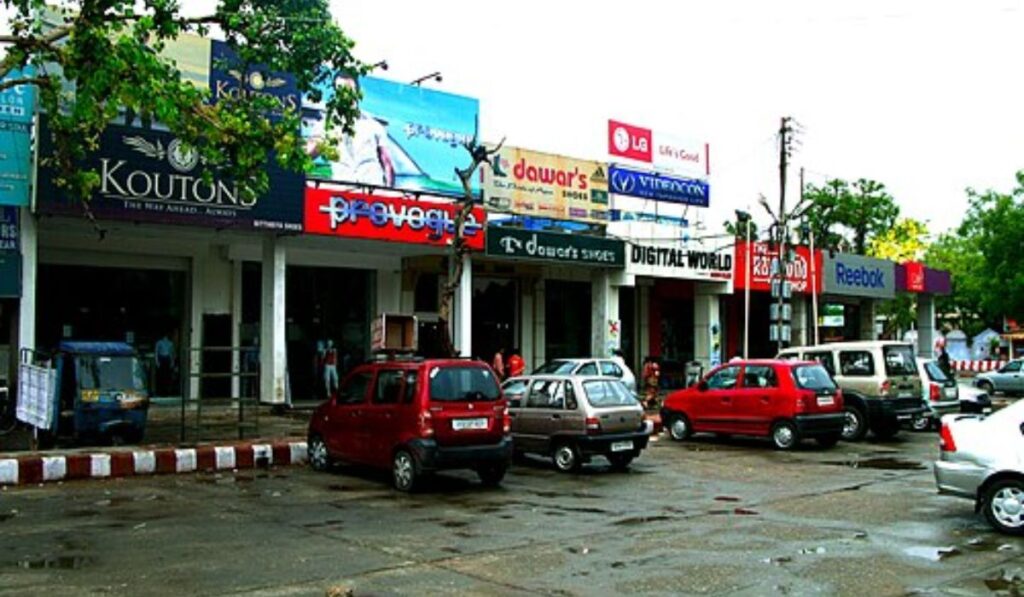
Overview
More modern and traveler-friendly than Kinari Bazaar, Sadar Bazaar is Agra’s go-to spot for souvenirs, marble handicrafts, leather goods, and casual dining, with a wider mix of fixed-price stores alongside stalls.
Why Visit?
- The most convenient one-stop shop for souvenirs, from marble inlay boxes to leather footwear
- A good mix of cafés and restaurants for a break between monument visits
- Easier to navigate than Kinari Bazaar for first-time visitors
- Close to several mid-range hotels
Attraction Snapshot
| Detail | Information |
|---|---|
| Best For | Souvenir shopping, casual dining, first-time visitors |
| Time Required | 1–2 hours |
| Entry Fee | Free (shopping costs vary) |
| Opening Hours | Roughly 10:00 AM – 10:00 PM |
| Location | Central Agra, near the Cantonment area |
Top Highlights
- Marble inlay (pietra dura) handicrafts
- Leather goods and footwear
- A range of cafés and mid-range restaurants
Local Expert Tip
If you’re buying marble inlay souvenirs, ask to see the stone-cutting process if the shop offers it — it’s a good way to judge quality and avoid overpriced resin imitations.
Common Mistakes to Avoid
Watch for shops that claim “government-certified” pricing as a way to justify inflated rates — genuine certification exists, but it’s not a reason to skip comparing prices.
Nearby Attractions
Central Agra hotels, several restaurants covered in our guide to the best restaurants near the Taj Mahal
Worth Visiting?
A practical, easy stop for souvenirs and a meal — not a “must-see,” but genuinely useful.
12. Jama Masjid, Agra
Overview
Built by Shah Jahan for his daughter Jahanara Begum, this mosque sits just opposite Agra Fort’s Delhi Gate and remains an active place of worship, distinct from the larger, more famous Jama Masjid in Delhi.
Why Visit?
- A working mosque with genuine local religious life, not a museum piece
- Striking red sandstone and marble façade with distinctive striped domes
- Located right beside Kinari Bazaar, making it easy to combine both stops
- A quieter counterpoint to Agra Fort’s crowds
Attraction Snapshot
| Detail | Information |
|---|---|
| Best For | Architecture and culture-focused travelers |
| Time Required | 30–45 minutes |
| Entry Fee | Generally free; modest donations appreciated |
| Opening Hours | Daylight hours, avoid prayer times for casual visits |
| Location | Opposite Agra Fort’s Delhi Gate |
Top Highlights
- The striped marble-and-sandstone dome pattern
- The large courtyard used for daily prayers
- Its direct proximity to Agra Fort and Kinari Bazaar
Local Expert Tip
Dress modestly — shoulders and legs covered — and remove footwear before entering, as with any active mosque in India.
Common Mistakes to Avoid
Don’t visit during Friday prayer times if you’re only there for sightseeing; go outside prayer hours to avoid disrupting worshippers.
Nearby Attractions
Agra Fort, Kinari Bazaar, Mankameshwar Temple
Worth Visiting?
A quick, worthwhile stop if you’re already in the Agra Fort area — not a dedicated half-day destination on its own.
13. Mankameshwar Temple
Overview
One of Agra’s oldest Shiva temples, Mankameshwar Temple predates much of the city’s Mughal architecture and sits close to the Yamuna, giving it a very different atmosphere from the monument circuit — devotional rather than historical.
Why Visit?
- A genuine look at Agra’s pre-Mughal religious history
- An active temple with regular rituals, especially striking during evening aarti
- A short, easy visit that fits naturally alongside Agra Fort
- Free of the ticketing and security lines common at Agra’s monuments
Attraction Snapshot
| Detail | Information |
|---|---|
| Best For | Culturally curious travelers, those interested in local religious life |
| Time Required | 30–45 minutes |
| Entry Fee | Free |
| Opening Hours | Early morning to evening, with peak activity during aarti |
| Location | Near Agra Fort, close to the Yamuna riverbank |
Top Highlights
- The Shiva lingam shrine, said to be among the city’s oldest
- Evening aarti rituals
- Riverside setting near the fort
Local Expert Tip
Time your visit for evening aarti if you want to see the temple at its most active and atmospheric — check locally for the exact timing, as it shifts slightly with the season.
Common Mistakes to Avoid
Dress modestly and remove footwear before entering, as you would at any active Hindu temple.
Nearby Attractions
Agra Fort, Jama Masjid, Kinari Bazaar
Worth Visiting?
A good cultural add-on rather than a headline destination — worthwhile if you’re already near Agra Fort.
14. Kalakriti Cultural & Convention Center (Mohabbat the Taj Show)
Overview
Kalakriti hosts “Mohabbat the Taj,” an evening dance-drama retelling the love story behind the Taj Mahal’s construction, performed with elaborate costumes, live music, and large-scale stage effects. It’s a theatrical, family-friendly way to close out a day of monument-hopping.
Why Visit?
- Puts the Taj Mahal’s backstory into a vivid, narrative format rather than plaques and guidebooks
- A good evening activity when the monuments themselves have closed for the day
- Family-friendly, with English-language audio options available
- A different pace after a physically demanding day of sightseeing
Attraction Snapshot
| Detail | Information |
|---|---|
| Best For | Families, couples, first-time visitors wanting context on Taj Mahal history |
| Time Required | Around 1 hour (show length), plus travel |
| Entry Fee | Tickets generally start around ₹500–800 depending on seating category — confirm current pricing when booking |
| Opening Hours | Evening shows, typically around 6:30–7:30 PM |
| Location | Near Fatehabad Road, roughly 10 km from the Taj Mahal |
Top Highlights
- Live dance and music performance
- Large LED visual backdrops depicting Taj Mahal construction
- English-language audio translation available for international visitors
Local Expert Tip
Book your seats a day in advance during peak season — the evening show is popular with tour groups, and good seats near the stage sell out.
Common Mistakes to Avoid
Don’t schedule this immediately after a full day at Fatehpur Sikri or the wildlife centres — you’ll want a short rest window before an evening show that requires focus.
Nearby Attractions
Sadar Bazaar, several restaurants along Fatehabad Road
Worth Visiting?
A worthwhile evening addition, particularly for travelers who want emotional and historical context rather than just architectural facts.
15. Chini Ka Rauza
Overview
Chini Ka Rauza is the tomb of Afzal Khan, a Persian poet and minister in Shah Jahan’s court, and it’s one of Agra’s most overlooked monuments — largely because its glazed tile decoration, unusual for Mughal India, has faded and chipped over the centuries.
Why Visit?
- One of the only Mughal-era buildings in India to use Persian-style glazed tile work extensively
- A near-empty, peaceful riverside site, ideal if you’re tired of crowds
- A genuinely different architectural style from every other stop on this list
- A glimpse into Shah Jahan’s court beyond the imperial family
Attraction Snapshot
| Detail | Information |
|---|---|
| Best For | Architecture enthusiasts, travelers seeking quiet, offbeat stops |
| Time Required | 30–45 minutes |
| Entry Fee | Minimal, typically a nominal ASI charge — confirm at the site |
| Opening Hours | Sunrise to sunset daily |
| Location | Riverside, north of Agra Fort, near Itmad-ud-Daulah |
Top Highlights
- Remaining glazed tile panels on the exterior
- The riverside setting, largely free of tourists
- Its unusual Persian architectural influence
Local Expert Tip
Combine this with your Itmad-ud-Daulah visit — they’re a short distance apart along the same riverbank, and pairing them saves a separate trip.
Common Mistakes to Avoid
Don’t expect restored, vibrant tilework — much of it has faded, and the appeal here is historical rarity rather than visual grandeur.
Nearby Attractions
Itmad-ud-Daulah, Mehtab Bagh
Worth Visiting?
Recommended for travelers who’ve already covered the major sites and want something genuinely off the beaten path.
Best Places by Traveler Type
Not everyone wants the same Agra trip. Here’s how to prioritize based on who you’re traveling with.
Best Places for First-Time Visitors
Taj Mahal, Agra Fort, Fatehpur Sikri — these three cover the essential Mughal story in one trip: the monument everyone comes for, the fort where the empire was actually run, and the abandoned capital that shows Akbar’s ambition. Together they give newcomers the full arc of Agra’s history.
Best Places for Couples
Mehtab Bagh, Taj Mahal at sunrise, Kalakriti’s evening show — the combination of a quiet sunset garden, an early-morning monument with fewer crowds, and a romantic dance-drama retelling the Taj’s love story makes for a genuinely memorable couple’s itinerary.
Best Places for Families
Wildlife SOS Elephant Conservation Centre, Taj Nature Walk, Sadar Bazaar — these spots pace well for children, mixing gentle walking, animal encounters, and easy shopping breaks without the long queues or dense crowds of the major monuments.
Best Places for Solo Travelers
Agra Fort, Chini Ka Rauza, Sadar Bazaar — solo travelers benefit from places that reward unhurried exploring: a large fort with plenty to absorb at your own pace, a nearly empty riverside tomb, and an easy, low-pressure shopping street.
Best Places for History Lovers
Agra Fort, Fatehpur Sikri, Itmad-ud-Daulah, Akbar’s Tomb — this set traces three generations of Mughal rule, from Akbar’s capital-building to Shah Jahan’s marble artistry, making it the richest historical circuit in the city.
Best Places for Photography
Mehtab Bagh, Taj Mahal, Agra Fort, Chini Ka Rauza — from the classic reverse Taj view to sandstone lit by morning sun and a nearly untouched riverside tomb, these four locations cover sunrise, sunset, and everything in between.
Best Places for Shopping
Kinari Bazaar, Sadar Bazaar — one delivers authentic, unpolished local commerce with textiles and jewelry, while the other offers an easier, tourist-friendly mix of marble handicrafts, leather goods, and souvenirs.
Best Places for Nature & Wildlife Lovers
Wildlife SOS Elephant Conservation Centre, Wildlife SOS Bear Rescue Centre, Taj Nature Walk — these three offer a genuine break from monument-hopping, combining ethical wildlife rehabilitation with quiet, green walking spaces near the Taj Mahal itself.
Entry Fee Summary Table
| Attraction | Indian Citizens | Foreign Tourists | Notes |
|---|---|---|---|
| Taj Mahal | ₹50 | ₹1,100 | +₹200 for main mausoleum access |
| Agra Fort | ₹50 | ₹650 | ₹40 / ₹600 on Fridays |
| Fatehpur Sikri | ₹35–50 | ₹550 | Some sections may need separate tickets |
| Itmad-ud-Daulah (Baby Taj) | ₹40 | ₹550 | — |
| Mehtab Bagh | ₹25–30 | ₹200–300 | — |
| Akbar’s Tomb (Sikandra) | ₹30 | ₹310 | — |
| Taj Nature Walk | Under ₹50 | Under ₹50 | Nominal, pay at gate |
| Wildlife SOS Elephant Centre | Varies | Varies | Advance booking recommended |
| Wildlife SOS Bear Rescue Centre | Varies | Varies | Advance booking recommended |
| Kinari Bazaar | Free | Free | Shopping costs extra |
| Sadar Bazaar | Free | Free | Shopping costs extra |
| Jama Masjid, Agra | Free | Free | Donations welcome |
| Mankameshwar Temple | Free | Free | — |
| Kalakriti (Mohabbat the Taj) | ₹500–800 | ₹500–800 | Same pricing regardless of nationality |
| Chini Ka Rauza | Nominal | Nominal | ASI-administered |
Ticket prices are subject to change. Please verify the latest prices on the official ASI or attraction website before your visit.
Hidden Gems in Agra
- Sur Sarovar Bird Sanctuary (Keetham Lake): A quiet wetland reserve near the Wildlife SOS centres, good for migratory birdwatching in winter and largely ignored by standard tour itineraries.
- Guru Ka Taal: A Sikh gurdwara and reservoir near Sikandra, historically linked to Guru Nanak’s visit to Agra — peaceful and rarely visited by tourists.
- Jama Masjid, Fatehpur Sikri: Distinct from Agra’s own Jama Masjid, this mosque within the Fatehpur Sikri complex houses the Tomb of Salim Chishti and is worth extra time beyond the main palace tour.
- Kailash Temple Complex: An ancient Shiva temple site on the outskirts of Agra with a natural spring, popular with local pilgrims but almost unknown to international visitors.
- Panchhi Petha Heritage Stores: Not a monument, but a genuine local institution — the original petha (candied ash gourd) makers of Agra, worth visiting for the history as much as the sweets.
Best Things to Do in Agra
Beyond simply visiting attractions, here’s how to actually experience the city:
- Watch the sunrise over the Taj Mahal from inside the complex rather than from a rooftop café — the changing light on the marble is worth the early wake-up call
- Take a heritage walk through Kinari Bazaar and Sadar Bazaar to see daily Agra life away from the monument circuit
- Try a home-style Mughlai thali at a local eatery instead of a hotel restaurant for a more authentic flavor profile
- Hire a licensed guide for Fatehpur Sikri, where signage is minimal and context matters
- Visit Wildlife SOS’s centres if you care about responsible, non-exploitative animal tourism
- Catch an evening cultural show at Kalakriti to end your day with storytelling rather than just sightseeing
For a broader list of experiences beyond this article, see our full guide to things to do in Agra.
Famous Food to Try
- Petha: Agra’s signature sweet, made from candied ash gourd, available in dozens of flavors from plain to saffron and paan
- Bedai with jalebi: A classic Agra breakfast — spiced, deep-fried lentil-stuffed bread paired with a sour potato curry and sweet jalebi
- Mughlai kebabs and curries: Agra’s Mughal heritage shows up strongly in its non-vegetarian cuisine, particularly slow-cooked, richly spiced dishes
- Dalmoth: A crunchy, spiced lentil-and-nut snack mix, popular as a savory alternative to the city’s famous sweets
- Street-side chaat: Found throughout Sadar Bazaar and Kinari Bazaar, offering a quick, flavorful break between sightseeing stops
For specific restaurant recommendations, see our guide to the best restaurants near the Taj Mahal, covering everything from street food to fine dining.
Shopping Guide
Agra’s shopping scene revolves around a few specialties that have survived since the Mughal era:
- Marble inlay (pietra dura): The same technique used on the Taj Mahal itself, now applied to boxes, coasters, and tabletops — best bought in Sadar Bazaar, where you can often see artisans at work
- Leather goods: Agra has a long-standing leather industry, and footwear, belts, and bags are widely available at reasonable prices
- Zardozi embroidery and textiles: Best found in Kinari Bazaar, particularly for wedding wear and heavily embroidered fabrics
- Handicrafts and brassware: Traditional decorative items, often sold alongside marble goods in tourist-focused shops
- Petha and other local sweets: Easy to carry home and a genuine taste of the city rather than a generic souvenir
A general rule: bargain at Kinari Bazaar and street stalls, but expect largely fixed pricing at established stores in Sadar Bazaar.
Best Time to Visit Agra
Agra’s climate swings hard between seasons, and timing your visit well changes the entire experience.
- October to February (Winter): The best months to visit — cool mornings, clear skies, and comfortable daytime temperatures. This is peak tourist season, so book tickets and hotels in advance.
- March (Early Spring): Still pleasant, with the added bonus of Holi festivities adding color and energy to the city, though monuments get crowded around the festival.
- April to June (Summer): Very hot, often exceeding 40°C. Manageable if you stick to early morning and evening visits, but midday sightseeing is genuinely uncomfortable.
- July to September (Monsoon): Humid with intermittent heavy rain. The upside is lush greenery and dramatically fewer crowds; the downside is unpredictable outdoor conditions.
- Festival periods: The Taj Mahotsav in February brings cultural performances and craft fairs near the Taj Mahal, while Diwali (October/November) adds a festive atmosphere citywide, though it also increases domestic tourist numbers.
Suggested One-Day Agra Itinerary
A realistic, unrushed flow for a single day:
- 6:00 AM – 8:30 AM: Sunrise visit to the Taj Mahal, entering through the Eastern Gate
- 8:30 AM – 9:30 AM: Breakfast — try bedai and jalebi at a local eatery near Taj Ganj
- 9:30 AM – 11:30 AM: Explore Agra Fort, including Musamman Burj and Sheesh Mahal
- 11:30 AM – 12:15 PM: Quick stop at Itmad-ud-Daulah (Baby Taj) or Chini Ka Rauza, depending on proximity to your route
- 12:15 PM – 1:30 PM: Lunch, followed by rest during the hottest part of the day
- 1:30 PM – 3:00 PM: Shopping at Sadar Bazaar or Kinari Bazaar
- 3:00 PM – 4:30 PM: Sunset visit to Mehtab Bagh for the reverse Taj Mahal view
- 6:30 PM – 8:00 PM: Evening show at Kalakriti (Mohabbat the Taj), followed by dinner
If you have a second day, dedicate it entirely to Fatehpur Sikri and Akbar’s Tomb, with the Wildlife SOS centres as an optional afternoon add-on.
Essential Travel Tips
- Book tickets online in advance: Especially for the Taj Mahal, where counter queues in peak season can run over an hour
- Dress modestly at religious sites: Cover shoulders and knees at temples and mosques; see our detailed guide on the Taj Mahal dress code for specifics on what’s restricted at the monument itself
- Photography rules vary: Tripods and professional equipment often require separate permits at ASI monuments; check before arriving with heavy gear
- Use prepaid or app-based transport: Auto and cycle-rickshaw rates can vary wildly with tourists; agree on a price upfront or use a metered/app-based option
- Hire only licensed guides: Official guides wear ASI identification; avoid unsolicited “guides” who approach you at monument gates
- Carry some cash: Digital payments are increasingly accepted, but smaller vendors and rickshaw drivers may still prefer cash
- Practice responsible tourism: Avoid touching monument surfaces, don’t feed animals at heritage sites, and support ethical wildlife tourism like the Wildlife SOS centres over elephant-riding attractions
Frequently Asked Questions
1. How many days do I need in Agra?
One full day covers the Taj Mahal, Agra Fort, and a nearby tomb comfortably. Two days let you add Fatehpur Sikri, Akbar’s Tomb, and the wildlife centres without rushing.
2. Is Agra safe for solo female travelers?
Agra is generally safe in tourist areas during daytime, though standard precautions apply — avoid isolated areas after dark, use registered transport, and be firm with touts near monument entrances.
3. Can I visit Agra as a day trip from Delhi?
Yes, it’s a common day trip, especially by fast train, and it covers the Taj Mahal and Agra Fort comfortably, though you’ll miss out on the sites further from the city center.
4. What is the best time of day to see the Taj Mahal?
Sunrise offers the softest light and thinnest crowds; late afternoon offers warmer tones but more visitors.
5. Do I need a guide inside the Taj Mahal?
Not strictly necessary for the Taj Mahal itself, since information panels exist, but a guide adds significant context at Agra Fort and especially Fatehpur Sikri, where signage is minimal.
6. Is Agra Fort worth visiting if I’ve already seen the Taj Mahal?
Yes — it offers a completely different perspective on the same Mughal history, plus one of the best distant Taj Mahal views in the city.
7. What should I wear when visiting Agra’s monuments?
Modest, comfortable clothing covering shoulders and knees works for all sites, with stricter expectations at active temples and mosques.
8. Is Fatehpur Sikri worth the extra trip?
If you have a second day or a genuine interest in Mughal history, yes. On a tight single-day schedule, it’s the first thing to cut.
9. Can senior citizens or travelers with mobility issues visit Agra’s monuments comfortably?
The Taj Mahal and Agra Fort involve some walking and uneven surfaces but are manageable with wheelchair assistance available at the Taj Mahal; Fatehpur Sikri’s terrain is more challenging.
10. What’s the best way to get from Delhi to Agra?
High-speed trains like the Gatimaan Express are the fastest option (under two hours), while private cars and buses offer more flexibility for multi-stop itineraries, including Fatehpur Sikri.
Conclusion
Agra rewards travelers who slow down. The Taj Mahal will always be the headline, but the city’s real character lives in the fort where an empire was run, the tomb that inspired the Taj’s design, the abandoned capital thirty minutes away, and the bazaars that haven’t changed their rhythm in generations.
Whether you have one focused day or a relaxed two, this list gives you a realistic path through Agra’s best places — monuments, markets, and everything in between. And if you’d rather skip the planning and let a local team handle routes, tickets, and timing, our Golden Triangle tour and dedicated Taj Mahal tour packages are built around exactly this itinerary.