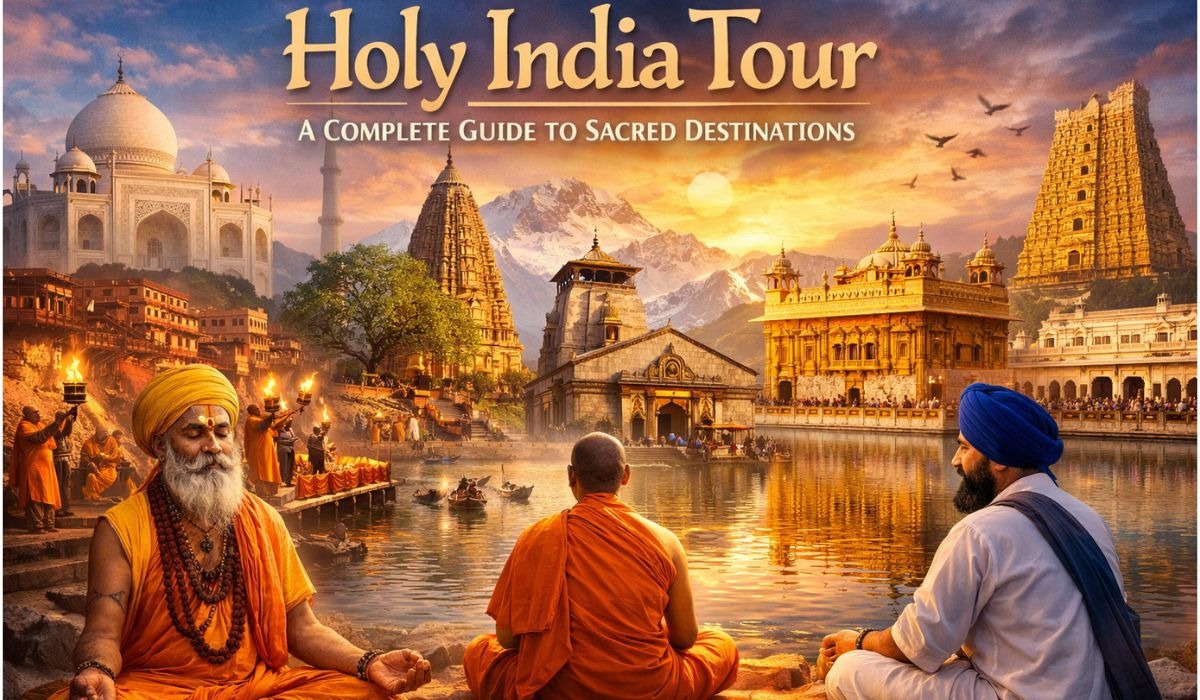

India is not just a country you visit — it is a place you experience. For thousands of years, seekers, pilgrims, monks, yogis, and travelers have walked its sacred paths in search of peace, purpose, and enlightenment. A Holy India Tour is more than sightseeing; it is a spiritual journey through ancient cities, powerful temples, sacred rivers, and living traditions.
If you are planning a spiritual journey in India, this complete guide will help you understand the most important holy destinations, what makes them unique, and why India remains the world’s heart of spiritual tourism.
What is a Holy India Tour?
A Holy India Tour focuses on visiting sacred cities, pilgrimage sites, and spiritual landmarks across different religions — Hinduism, Buddhism, Sikhism, Islam, and Jainism. It combines:
- Temple visits
- River ceremonies
- Meditation experiences
- Ashram stays
- Cultural rituals
- Spiritual learning
Unlike regular tourism, a holy tour connects you with India’s spiritual heritage and living faith traditions.
1. Varanasi – The Spiritual Capital of India
One of the oldest living cities in the world, Varanasi is considered the spiritual heart of India.
Why Visit Varanasi?
- Witness the mesmerizing Ganga Aarti at Dashashwamedh Ghat
- Take a sunrise boat ride on the River Ganges
- Visit the sacred Kashi Vishwanath Temple
- Explore nearby Sarnath, where Lord Buddha gave his first sermon
Varanasi represents life, death, rebirth, and liberation (moksha). For many travelers, this city becomes the most powerful part of their holy journey.
2. Amritsar – The Golden Temple Experience
Located in Punjab, Amritsar is home to the magnificent Golden Temple (Harmandir Sahib).
Why It’s Special:
- The temple welcomes people from all religions
- Experience the world’s largest free community kitchen (Langar)
- Peaceful prayer atmosphere surrounded by sacred water
The Golden Temple symbolizes equality, service, and humility — core values of Sikhism.
3. Kedarnath – Sacred Temple in the Himalayas
High in the Himalayas lies the revered Kedarnath Temple.
Dedicated to Lord Shiva, Kedarnath is part of the Char Dham pilgrimage and one of the twelve Jyotirlingas.
What Makes Kedarnath Unique?
- Stunning Himalayan setting
- Challenging yet rewarding pilgrimage trek
- Deep spiritual energy and devotion
This destination is ideal for those seeking both spiritual growth and adventure.
4. Bodh Gaya – Where Buddha Attained Enlightenment
Bodh Gaya is one of the most important Buddhist pilgrimage sites in the world.
Here stands the sacred Mahabodhi Temple, marking the spot where Siddhartha Gautama became the Buddha.
Spiritual Highlights:
- Meditation under the Bodhi Tree
- International monasteries
- Calm and reflective atmosphere
Bodh Gaya attracts travelers seeking mindfulness, peace, and enlightenment.
5. Rameswaram – Southern Sacred Gateway
Located in Tamil Nadu, Rameswaram is home to the magnificent Ramanathaswamy Temple.
It is one of the Char Dham pilgrimage sites and closely linked to the epic Ramayana.
Why Include Rameswaram in Your Holy Tour?
- Longest temple corridor in India
- Sacred water tanks for ritual bathing
- Peaceful coastal spiritual setting
Multi-Religious Spiritual Harmony in India
What makes a Holy India Tour unique is its diversity. In one journey, you can explore:
- Hindu temples in Varanasi and Rameswaram
- Sikh spirituality in Amritsar
- Buddhist enlightenment in Bodh Gaya
- Islamic heritage in Ajmer
- Jain temples in Rajasthan
India’s spiritual tourism thrives because it embraces all faiths.
Best Time for a Holy India Tour
The ideal time depends on your destinations:
- October to March: Best weather for most holy cities
- April to June: Good for Himalayan pilgrimages
- Festival periods: Unique spiritual energy (Diwali, Kumbh Mela, etc.)
Planning ahead ensures a comfortable and meaningful journey.
Who Should Take a Holy India Tour?
This journey is perfect for:
- Spiritual seekers
- Cultural travelers
- Yoga and meditation enthusiasts
- Pilgrimage travelers
- First-time visitors wanting deeper experiences
Even if you are not religious, India’s sacred cities offer unforgettable cultural and emotional experiences.
Tips for Planning Your Spiritual Journey
- Dress modestly at religious sites
- Respect local customs and rituals
- Hire knowledgeable guides
- Combine spiritual destinations with cultural landmarks
- Allow time for reflection and rest
Why India is the Global Hub of Spiritual Tourism
From the River Ganges to the Himalayas, from ancient temples to meditation retreats, India offers something no other destination can — a living spiritual civilization.
Millions visit every year not just to see monuments, but to feel transformation.
A Holy India Tour is not just about faith; it is about connection — with history, with culture, and most importantly, with yourself.
FAQs About Holy India Tour
1. How long should a Holy India Tour be?
Ideally 7–14 days, depending on the number of destinations.
2. Is it safe for international travelers?
Yes, major pilgrimage cities are well-connected and tourist-friendly.
3. Can I combine a holy tour with the Golden Triangle?
Absolutely. Many travelers combine Delhi, Agra, and Varanasi.
4. Do I need special permits?
Some Himalayan temples require seasonal registration.
5. Is a guide necessary?
A guide enhances understanding of rituals and history.
Final Thoughts
A Holy India Tour is not just travel — it is transformation. Whether you seek blessings, cultural immersion, or inner peace, India’s sacred destinations welcome you with open arms. If you are ready to explore the spiritual soul of India, this journey will stay with you long after you return home.