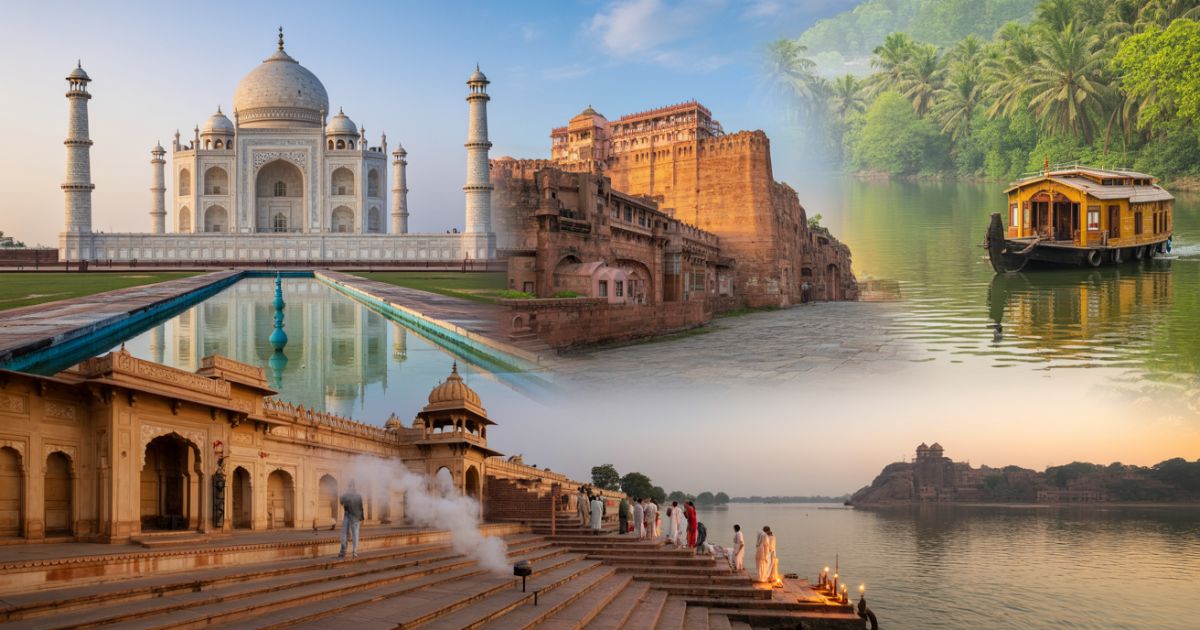

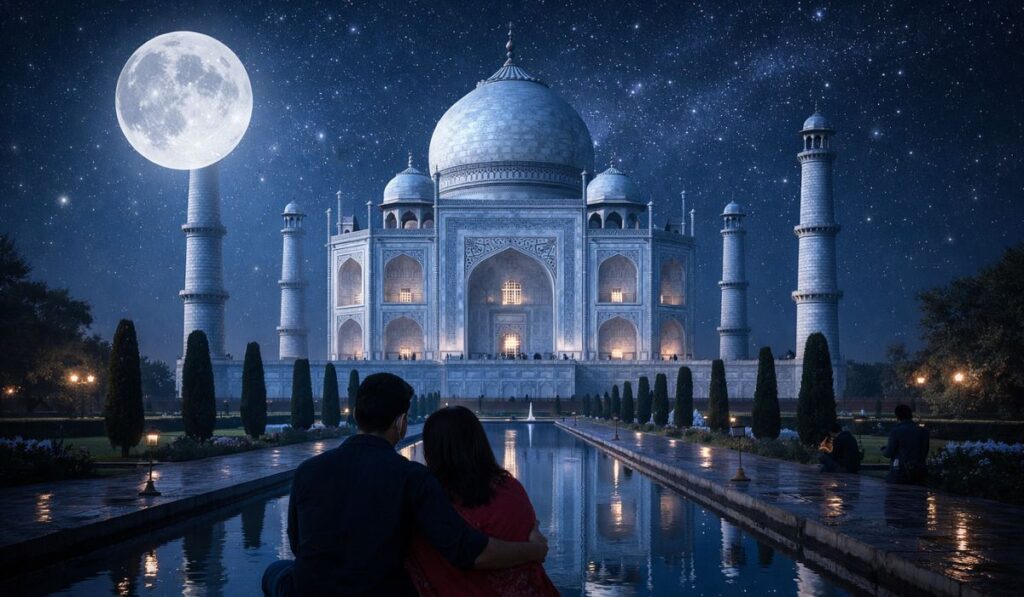
Experiencing the Taj Mahal Full Moon Night View is nothing short of magical. While millions visit during the day, only a limited number of travelers get the rare opportunity to see this ivory-white marble monument glowing under the soft silver light of the moon. Located in the historic city of Agra, the iconic Taj Mahal transforms completely at night. The marble reflects the moonlight, creating an ethereal aura that feels calm, romantic, and almost dreamlike.
Unlike the busy daytime hours, the full moon night visit offers peace, controlled entry, and a serene atmosphere. If you are planning a special trip to India or looking for a once-in-a-lifetime experience, witnessing the Taj Mahal under a full moon should be on your travel bucket list.
Quick Overview:
| Aspect | Details |
| Location | Agra, Uttar Pradesh, India |
| Viewing Days | Full moon night + 2 days before & 2 days after |
| Timing | 8:30 PM to 12:30 AM (in batches) |
| Entry Limit | Approx. 400 visitors per night |
| Duration | 30 minutes per batch |
| Ticket Booking | Advance booking recommended |
| Best For | Couples, photographers, luxury travelers |
What Makes the Taj Mahal Full Moon Night View So Special?
The Taj Mahal is already one of the Seven Wonders of the World, but under moonlight, it becomes even more extraordinary. During the day, sunlight highlights the fine carvings and architectural details. At night, however, the monument appears softer and almost translucent.
The white Makrana marble absorbs and reflects the moonlight, giving the structure a bluish-silver glow. The reflection in the water channels of the Mughal garden enhances the surreal atmosphere.
A Romantic and Peaceful Ambience
The night viewing experience is calm and intimate. Only a limited number of visitors are allowed, making it far less crowded than daytime visits. This creates a peaceful setting ideal for:
- Couples celebrating anniversaries or honeymoons
- Photography enthusiasts
- Travelers seeking a unique cultural experience
History and Symbolism Under Moonlight
Commissioned by Mughal Emperor Shah Jahan in memory of his beloved wife Mumtaz Mahal, the Taj Mahal symbolizes eternal love. Seeing it under a full moon enhances this romantic symbolism.
The monument’s symmetry, calligraphy, and intricate marble inlay work appear softer and more mystical at night. The moonlight highlights the dome and minarets, creating dramatic shadows that add depth and emotion to the structure.
Night Viewing Schedule and Rules
When Can You See the Taj Mahal at Night?
The Taj Mahal Full Moon Night View is available:
- On the full moon night
- Two nights before the full moon
- Two nights after the full moon
Night viewing is not allowed on Fridays or during the month of Ramadan.
Entry Process
Visitors are divided into batches of about 50 people each. Every batch gets approximately 30 minutes inside the viewing area.
Important guidelines include:
- Advance booking is mandatory
- Limited photography allowed (no tripods)
- Security checks are strict
- Large bags are not permitted
Best Time of Year for a Full Moon Visit
While the Taj Mahal Full Moon Night View happens every month (subject to rules), weather plays an important role.
Ideal Months
- October to March – Pleasant weather and clearer skies
- Winter months often provide better visibility
Avoid
- Monsoon season (July–September) due to cloud cover
- Extremely foggy winter nights in peak January
Clear skies ensure that the moonlight shines directly on the marble, enhancing the visual experience.
How to Book Tickets for Taj Mahal Full Moon Night View
Tickets for night viewing are limited and highly sought after.
Booking Tips
- Book at least 1–2 weeks in advance
- Carry valid ID proof
- Confirm exact full moon dates before planning
If you prefer a hassle-free experience with pre-arranged tickets, guided assistance, and hotel transfers, you can also consider a professionally organized Moon Light Taj Mahal Tour that takes care of permits and logistics for you.
Travelers often combine the night viewing with a luxury stay in Agra to make the experience more comfortable and memorable.
Photography During Full Moon Night
Capturing the Taj Mahal at night can be challenging but rewarding.
Photography Guidelines
- No professional tripods allowed
- Mobile photography permitted
- Flash usage may be restricted
For best results:
- Use night mode on smartphones
- Adjust ISO and exposure if using a camera
- Focus on reflections and symmetry
The moonlight naturally creates soft highlights and dramatic contrasts.
Why This Topic Matters
The Taj Mahal Full Moon Night View is more than just sightseeing; it is a rare cultural and emotional experience. Unlike regular visits, this experience allows travelers to connect deeply with the monument’s story and symbolism.
In today’s fast-paced travel culture, where destinations can feel crowded and rushed, the night viewing offers something different—stillness and reflection.
It also highlights India’s heritage preservation efforts, as entry is strictly regulated to protect the monument.
For luxury travelers and international tourists, this experience elevates a standard Taj Mahal visit into a once-in-a-lifetime memory.
Tips for Visitors / Travelers
Planning ahead ensures a smooth and unforgettable experience.
Practical Travel Tips
- Check the lunar calendar before booking flights
- Arrive early for security checks
- Carry minimal belongings
- Dress comfortably according to season
- Avoid visiting during heavy fog conditions
Enhance Your Experience
- Combine night viewing with a sunrise visit
- Stay in a hotel with Taj Mahal views
- Hire a knowledgeable local guide for deeper historical insights
The combination of night and early morning views offers two completely different but equally mesmerizing perspectives.
Comparing Day View vs Full Moon Night View
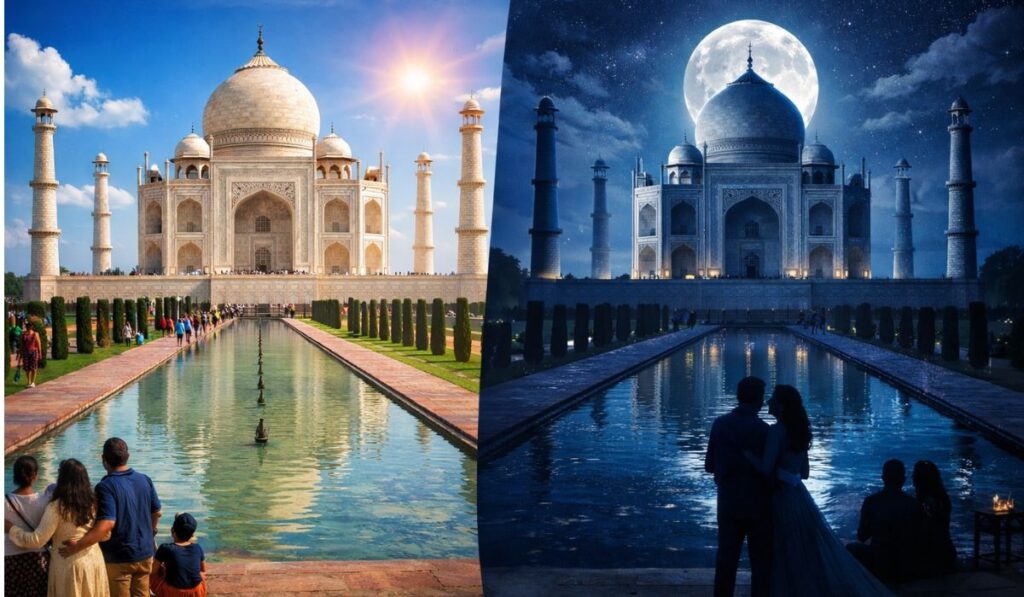
| Feature | Day Visit | Full Moon Night Visit |
| Crowd Level | High | Limited & Controlled |
| Light Effect | Bright & Detailed | Soft & Ethereal |
| Photography | Clear & Vibrant | Dramatic & Romantic |
| Atmosphere | Energetic | Peaceful & Intimate |
Both experiences are beautiful, but the night view offers a rare and exclusive charm.
How to Include This in Your India Travel Plan
Many travelers visiting the Golden Triangle circuit (Delhi–Agra–Jaipur) plan their itinerary around the full moon schedule. Since the Taj Mahal Full Moon Night View is date-specific, flexibility in travel dates helps.
Consider:
- Arriving in Agra one day before full moon
- Staying overnight for next morning exploration
- Pre-booking tickets well in advance
Planning smartly ensures you do not miss this exclusive experience.
Frequently Asked Questions (FAQs)
1. How many people are allowed during Taj Mahal full moon night viewing?
Approximately 400 visitors are allowed per night, divided into smaller batches.
2. Is photography allowed during Taj Mahal Full Moon Night View?
Yes, but tripods and professional equipment are generally restricted.
3. Can I enter the main mausoleum at night?
Night viewing is usually limited to the outer platform area, not the inner chamber.
4. How early should I book tickets?
It is recommended to book at least 7–14 days in advance due to limited availability.
5. What happens if the sky is cloudy?
If clouds block the moon, visibility may reduce, but entry fees are generally non-refundable.
6. Is the Taj Mahal open every full moon night?
It is open on full moon night and two nights before and after, except Fridays and certain restrictions.
7. Is it safe to visit at night?
Yes, security arrangements are strict, and the experience is well-managed.
Conclusion
The Taj Mahal Full Moon Night View is a rare and enchanting experience that transforms an already iconic monument into something truly magical. Under the moonlight, the Taj Mahal appears softer, more romantic, and deeply symbolic.
If you are planning a trip to Agra, consider aligning your travel dates with the full moon schedule. Witnessing the monument glow in moonlight is not just sightseeing—it is an unforgettable memory that stays with you forever.
If you are planning your Taj Mahal Full Moon Night View experience and want everything arranged smoothly, Perfect India Tour can help you plan a seamless and memorable visit to Agra.