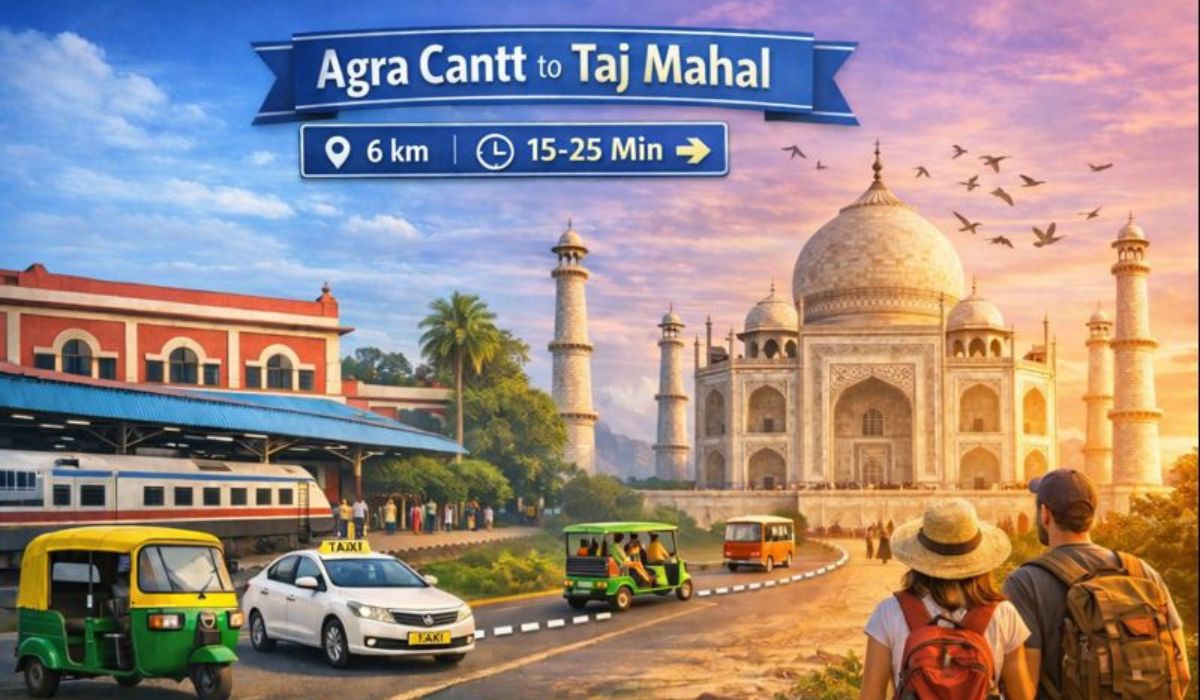
India is a land of extraordinary diversity, offering travellers a rich blend of history, spirituality, architecture, and natural beauty. Whether you are planning a family holiday, a romantic getaway, or a solo adventure, you’ll find some of the best places to visit in India spread across its vibrant cities, sacred towns, and heritage destinations. From the timeless ghats of Varanasi—often regarded as one of the purest expressions of Indian culture and spirituality—to grand forts, colourful markets, and living traditions, every destination tells a unique story. India’s cultural depth, historic monuments, and festive spirit ensure that every journey feels meaningful and memorable. In the sections below, we explore the best places to visit in India, each known for its culture, architecture, and unforgettable travel experiences.
Delhi – India’s Historic & Modern Capital
Delhi, India’s capital, is a fusion of old and new. This mega-city hosts three UNESCO World Heritage sites. Notable are Qutb Minar, a 72.5-metre red sandstone tower (the “tallest masonry tower in India”), and the Red Fort built by Shah Jahan in 1648. The Red Fort’s sandstone walls enclose palaces and gardens described as the “zenith of Mughal creativity”. Visitors to Delhi enjoy exploring Chandni Chowk bazaar and historic lanes, witnessing a blend of Mughal, colonial and modern architecture. Landmarks like India Gate, Lotus Temple, and Humayun’s Tomb further showcase Delhi’s cultural legacy. Delhi’s lively markets, street food and rich history make it a must-see travel destination in India.
Agra – Home of the Iconic Taj Mahal
Agra is home to the Taj Mahal, India’s most famous monument. This ivory-white mausoleum (built 1631–48 by Emperor Shah Jahan) is lauded as “the jewel of Muslim art in India” and one of the world’s universally admired masterpieces. The Taj’s perfect symmetry and sunrise views draw travellers worldwide. Agra also features the red-sandstone Agra Fort and the nearby abandoned city Fatehpur Sikri – both UNESCO sites. Together, these historic sites make Agra a top cultural destination in India. Travelers often visit Agra in winter when the weather is warm and dry. Agra appeals to couples and families seeking history and romance, from strolling Mughal gardens to reflecting on the Taj’s sublime beauty.
Jaipur – The Pink City of Royal Heritage
Jaipur, Rajasthan’s capital, is known as the Pink City and “India’s first planned city”. Founded in 1727, it features wide boulevards and uniform pink-coloured buildings. Iconic landmarks include the City Palace and the Hawa Mahal with its ornate façade, and the Jantar Mantar observatory – all showcasing Rajasthani craftsmanship. The city’s historic forts and colourful bazaars (for handicrafts, textiles and jewellery) add to Jaipur’s appeal. It’s a prime stop on any top travel destinations in India list due to its blend of culture and architecture.
Rajasthan Tourist Destinations
Rajasthan’s desert state includes many famous tourist places:
Explore Udaipur – Romantic Lakes & Mewar Heritage
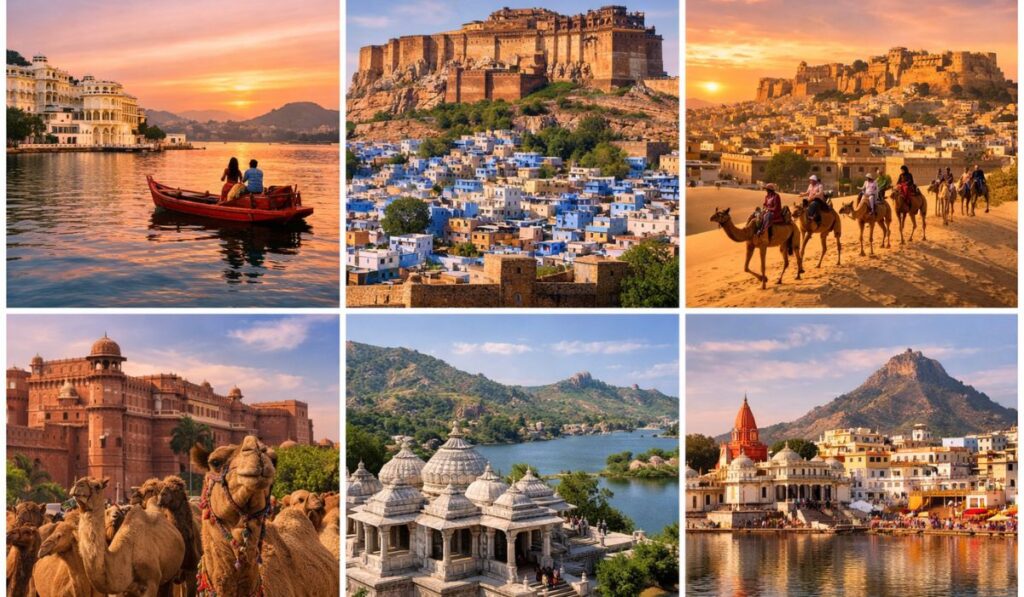
Often called the Venice of the East, Udaipur is set among lakes and Aravalli hills. The marble Lake Palace on Pichola Lake is “one of the most beautiful sights” of the city. Udaipur’s romantic boat rides, palace museums and sunset views make it a favourite for couples.
Discover Jodhpur – Mehrangarh Fort & Blue City Views
The vivid blue houses near Mehrangarh Fort define Jodhpur. The massive Mehrangarh Fort (rising on a ridge) is “one of the most famous in India”. Inside, its palaces have intricate carvings and galleries. Jodhpur’s markets (spices, textiles) and the Mehrangarh fortress give travellers a taste of desert-culture.
Visit Jaisalmer – Desert Safari & Golden Fort Experience
Jaisalmer’s yellow sandstone fort dominates the Thar Desert. The 12th-century Jaisalmer Fort is a UNESCO World Heritage site and a unique “living fort” (many people still reside inside). The city is famed for camels and sand dunes. Tourists enjoy sunset camel rides in the Sam dunes and the annual Desert Festival.
Travel to Bikaner – Junagarh Fort & Desert Traditions
A historic outpost with grand Junagarh Fort and palaces. It’s also known for a royal camel breeding farm, reflecting Rajasthan’s traditional desert life. Bikaner’s sweets and savory snacks (bhujia) are local treats.
Visit Mount Abu – Hill Station Escape in Rajasthan
The only hill station in Rajasthan, Mount Abu offers cool pine forests and lakes. It’s “well-known for its exquisitely carved marble Dilwara temples”, a group of Jain shrines famous for their intricate white marble work. Beyond temples, travellers enjoy sunsets at Nakki Lake and viewpoints over the forests.
Pushkar – Sacred Ghats, Temples & Camel Fair
A sacred lakeside town famous for its Brahma Temple – one of the very few dedicated to Lord Brahma. Pushkar Lake is called Tirtha Raj, and taking a holy dip here is believed to be purifying. Every November, the city hosts the vibrant Pushkar Camel Fair where tens of thousands gather for camel and livestock trading. Pushkar’s hippie cafes and pilgrimage atmosphere make it unique among Rajasthan’s cities.
Amritsar – Spiritual Heart of Sikhism
The Golden Temple in Amritsar is the holiest Gurdwara of Sikhism. This glistening gold-plated shrine (completed 1604) was built to be “a place of inclusivity and openness”. Its four entrances symbolise openness, welcoming visitors of all faiths. Surrounded by the sacred Amrit Sarovar pond, the temple’s evening Guru-ka-langar (community feast) and nightly Palki Sahib ceremony are unforgettable experiences. Nearby, Jallianwala Bagh memorial (site of 1919 tragedy) and the Wagah border ceremony highlight Amritsar’s historical depth. Amritsar appeals to cultural and spiritual travellers, and evenings at the Golden Temple (especially in the golden light) are especially magical.
Ayodhya – Sacred City of Lord Ram
Ayodhya is a deeply sacred city for Hindus. Revered as the birthplace of Lord Rama (from the epic Ramayana), it was the ancient capital of Kosala. Ayodhya is one of India’s seven holiest cities (Sapta Puri). The new grand Ram Mandir (consecrated 2024) dominates the skyline. Pilgrims bathe in the Sarayu River, attend daily aartis (rituals), and witness vibrant Ram Leela plays during festivals. The city’s blend of mythology, temple architecture and riverside ghats makes Ayodhya a powerful cultural destination.
Varanasi – Spiritual Capital of India
Varanasi, on the Ganges, is one of the world’s oldest continuously inhabited cities. It’s often called the spiritual capital of India. Varanasi’s riverfront ghats, temples, and rituals exemplify Hindu culture – UNESCO notes that the ghats “are an epitome of the traditions” attached to this holy city. At Dashashwamedh Ghat, pilgrims attend the Ganga Aarti (sunset prayer) with lamps and chants – a spine-tingling spectacle. Other attractions include the Kashi Vishwanath Temple and nearby Sarnath (Buddha’s first sermon site). Varanasi appeals to travellers seeking cultural immersion and spiritual atmosphere. Boat rides at dawn, silk weaving workshops, and street food also make it a “top travel destination in India” for experiential travel.
Pushkar – Sacred Lake & Camel Fair Town
Pushkar merits its own section despite being part of Rajasthan. Set around a sacred lake, Pushkar’s charm is laid-back and spiritual. The Pushkar Lake has 52 ghats where pilgrims bathe at sunrise. The Brahma Temple – dedicated to the creator god Brahma – is one of the very few in the world. Pushkar’s compact town is easy to explore on foot; travellers enjoy wandering temples, bazaars and cafés. As noted, bathing in Pushkar Lake is considered meritorious. Every November, the Pushkar Camel Fair draws crowds for its folk music, colourful turbans, and lively camel and cattle trade. Pushkar appeals especially to solo travellers and couples looking for culture and calm spirituality in Rajasthan.
Khajuraho – Temples of Art & Architecture
The Khajuraho Group of Monuments is world-famous for its exquisitely carved sandstone temples. Built by the Chandella kings, these temples represent the pinnacle of North Indian temple art. As UNESCO describes, Khajuraho’s temples “are known for the harmonious integration of sculptures with their architecture” – their walls are profusely carved with sacred and secular motifs, including mythical figures and celestial dancers. The largest, Kandariya Mahadev Temple, is famed for its erotic sculptures (a subtle spiritual symbolism). A visit to Khajuraho usually includes cycling among the temple complex, watching the sound-and-light show at night, and seeing how local mythology is portrayed in stone. Winter is the best time to visit Khajuraho when days are cool. These medieval monuments make Khajuraho an outstanding historical place in India.
Essential India Travel Tips
- Best season: Plan your trip in the cooler, dry months (October–March). Most of India is warm, sunny and dry then. (The plains get very hot in April–May, and July–August is monsoon.)
- Dress respectfully: Wear loose, modest clothing. Long, flowing garments are comfortable in the heat and respectful of local culture. (For women, covering shoulders and knees is advisable at temples.)
- Stay safe and healthy: Drink bottled or filtered water; avoid raw street salads. Try to eat at busy, hygienic places. Keep hand-sanitizer. Be cautious with personal belongings and use reputable guides or tours.
- Local transport: India’s trains and domestic flights connect major destinations. As one traveller notes, taking a train in India is an unforgettable experience and something you shouldn’t miss. Book in advance for comfort (e.g. AC chair or sleeper class).
- Timing attractions: Visit popular sites early in the morning when crowds are thinner and the light is best (e.g. sunrise at the Taj Mahal). Monuments often open early and close by dusk.
- Respect culture: Remove shoes at temple entrances, and ask permission before photos if unsure. Greet people with a smile and simple “Namaste” (common greeting). Observe local customs quietly, especially during religious ceremonies.
- Local SIM & payments: Getting an Indian SIM card helps with maps and OTP logins. (Most things use WhatsApp/OTP, so internet access is handy.) Many payments still rely on QR/OTP, so carry some cash.
- Expect variety: India is vast – the north and south differ in food, language and climate. If it’s cold or foggy in Delhi/Rajasthan winter, head to sunny Kerala/Goa. In scorching summer, consider cool places like Shimla/Ladakh.
FAQs About Visiting India
1. What is the best time to visit India?
October to March is ideal for most regions due to pleasant weather.
2. How many days are enough to explore India?
A 10–14 day itinerary allows you to comfortably cover all major highlights.
3. Which place is best for a first trip to India?
The Golden Triangle (Delhi, Agra, Jaipur) is perfect for beginners.
4. Is India expensive to travel?
India offers excellent options for both budget and luxury travelers.
5. Which Indian destination is best for spirituality?
Varanasi and Rishikesh are top spiritual destinations.
6. Is India safe for tourists?
Yes, with basic precautions and trusted travel planning.
Final Thoughts on Visiting India
India’s famous tourist places offer travellers an unforgettable mix of culture, history and natural beauty. From the awe of the Taj Mahal and the solemnity of Varanasi’s ghats, to the royal splendour of Jaipur and the Golden Temple’s serenity, each destination is special. These best places to visit in India reflect the country’s rich tapestry of religion, art and architecture. Whether enjoying spicy street food, colourful festivals or ancient temples, travellers will return enriched. So pack your bags and explore India’s top travel destinations – you’ll discover why so many fall in love with this diverse, historic land. Safe travels and well-travelled memories await!